Photographing the Kings of the New Zealand Forests.
Photographing the Kings of the New Zealand Forests
Article and photography by: Deon van Rooyen
There is something almost sacred and mystical about entering a kauri forest.
As you walk beneath these ancient giants, it is easy to imagine the whispers of the past carried on the forest air. An extraordinary sense of stillness surrounds the trees, while their immense trunks rise like ancient pillars towards the canopy. Standing beside a kauri, touching its weathered bark and looking upwards into the forest, you feel a connection with nature that is difficult to describe.
These are truly the Kings of the New Zealand forest.
The trunks of mature kauri are magnificent. Their textured, earthy-coloured bark is often highlighted by patches of golden kauri gum, while mosses, lichens and delicate ferns grow around their bases. Shafts of light filtering through the canopy can transform the forest floor into a magical landscape of shadows, greens and golds.
For centuries, kauri has played an important role in the history of Aotearoa New Zealand. The timber was highly prized for its strength and durability and was used extensively for shipbuilding, house construction, furniture and other purposes. Kauri gum, or resin, was also harvested and exported around the world, where it was particularly valued in the manufacture of varnishes and other products.
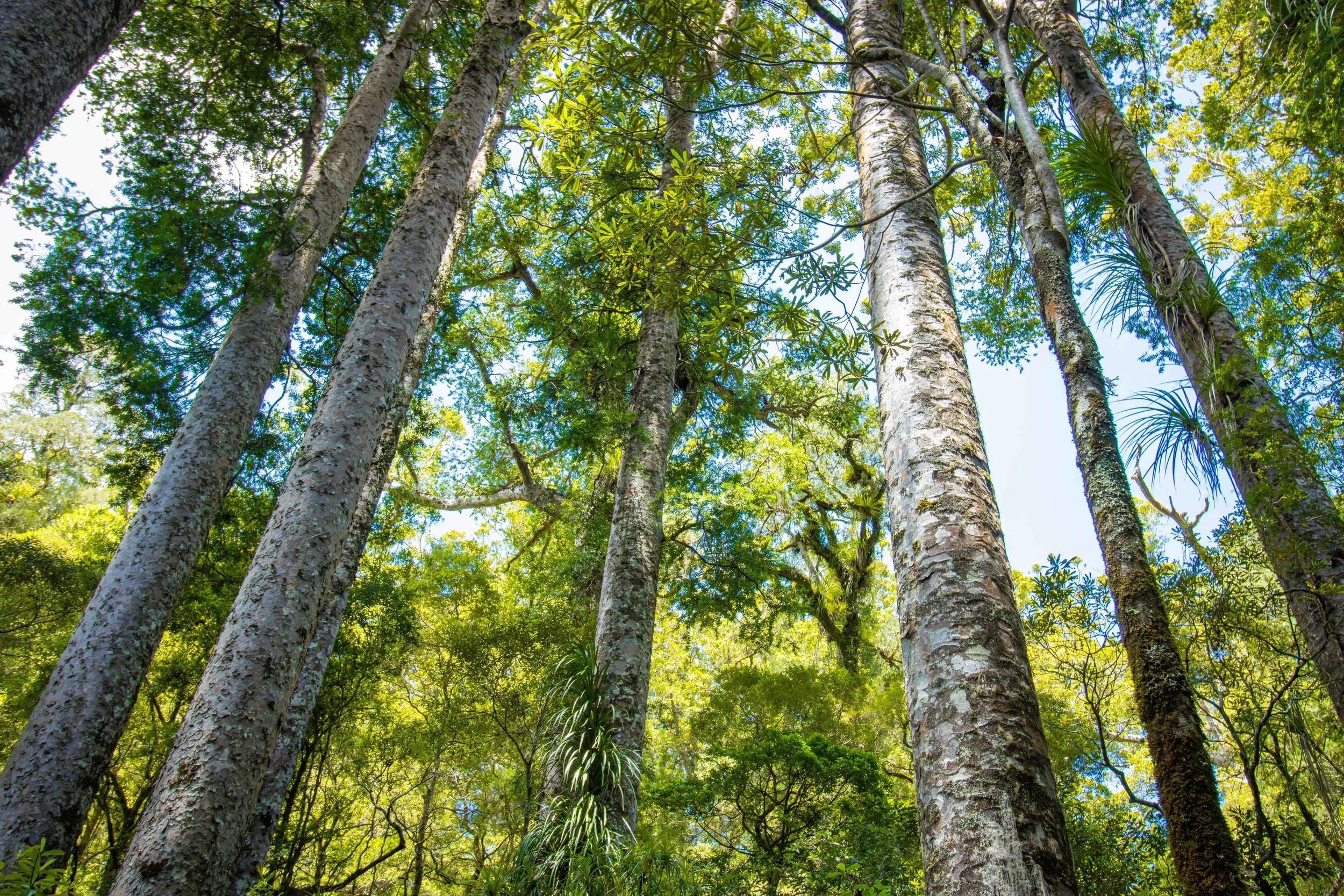
Majestic pillars of the forest
But this enormous demand came at a cost.
Vast areas of kauri forest were cleared during the period of European settlement, and the ancient forests were reduced dramatically. Today, kauri survive in protected remnants of what was once a much more extensive forest ecosystem.
Thankfully, conservation efforts are helping to protect these remarkable trees and the ecosystems that depend upon them. Visiting a kauri forest today is therefore more than simply an opportunity to experience a beautiful landscape—it is a reminder of the importance of protecting what remains for future generations.
A Forest Within a Forest
Kauri forests create a remarkable environment for other plants and wildlife.
As you enter the forest, one of the first things you notice is the change in atmosphere. On a hot summer's day, the temperature can seem to drop almost immediately beneath the dense canopy. The air becomes cooler and more humid, and the sounds of the outside world gradually disappear.
Small plants, ferns and mosses thrive in the sheltered environment, while birds move through the canopy and forest floor. Every direction offers another photographic opportunity.
For a photographer, however, photographing a kauri forest presents its own challenges.
The scale of these trees can be difficult to communicate in a photograph. A conventional telephoto lens may isolate the detail of the bark, but to capture the true grandeur of the forest I prefer to work with a wide-angle lens.
Photographing the Kauri
During a recent visit to Puketi Forest in Northland, I photographed the kauri using a 14-24mm wide-angle lens. My camera was mounted on a sturdy tripod, allowing me to make longer exposures and capture as much available light as possible as it filtered through the forest canopy.
I selected a relatively small aperture of f/12, providing the depth of field necessary to keep both the foreground and towering trees acceptably sharp.
A tripod also encourages you to slow down and keep my ISO as low as possible.
Rather than quickly moving from one scene to another, I can carefully study the composition, look for leading lines within the forest and wait for the light to change. A momentary shaft of sunlight breaking through the canopy can completely transform an otherwise ordinary scene.
I particularly enjoy photographing from a low viewpoint. Looking upwards exaggerates the scale of the kauri and allows the trunks to dominate the frame, creating a feeling of standing beneath enormous towering natural pillars.
Photography in a kauri forest is therefore not simply about recording the appearance of a tree. It is about trying to communicate scale, age, atmosphere and emotion.
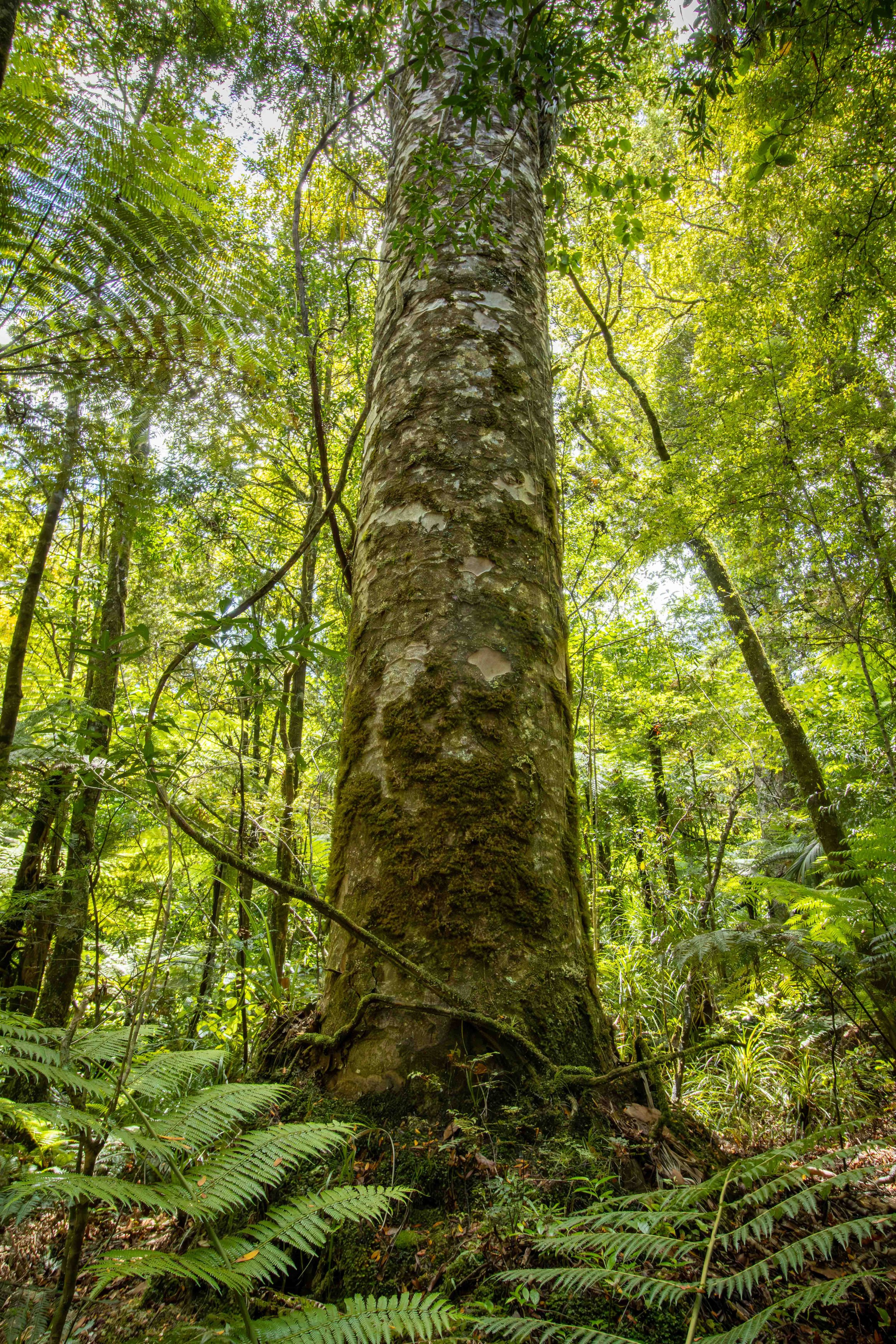
Sacred Kauri trees of New Zealand
Visiting New Zealand's Kauri Forests
There are several protected kauri forests and conservation areas across northern Aotearoa that provide opportunities to experience these magnificent trees.
Puketi Forest, in Northland, is one of the outstanding places to explore kauri forest and was the location for my recent photographs. The forest contains some impressive examples of mature kauri and provides photographers with an incredible variety of subjects, from enormous trunks to delicate forest-floor details.
Another important destination is the Waipoua Forest, home to some of New Zealand's most famous kauri trees, including Tāne Mahuta, one of the largest and best-known living kauri.
For anyone interested in the history of kauri and its importance to New Zealand, the Kauri Museum at Matakohe, in the Kaipara District, is also well worth visiting. The museum provides a fascinating insight into the history of kauri, the timber industry and the people who worked in the forests.
Photographing With Respect
Today, photographing kauri comes with an important responsibility.
These forests are fragile environments, and visitors must take care not to damage the forest floor or disturb the trees and wildlife. Kauri dieback disease remains a serious threat, making it essential that photographers and visitors follow all current hygiene and access requirements.
For me, photographing these ancient trees is ultimately about more than creating an attractive image.
It is about creating a visual record of something precious.
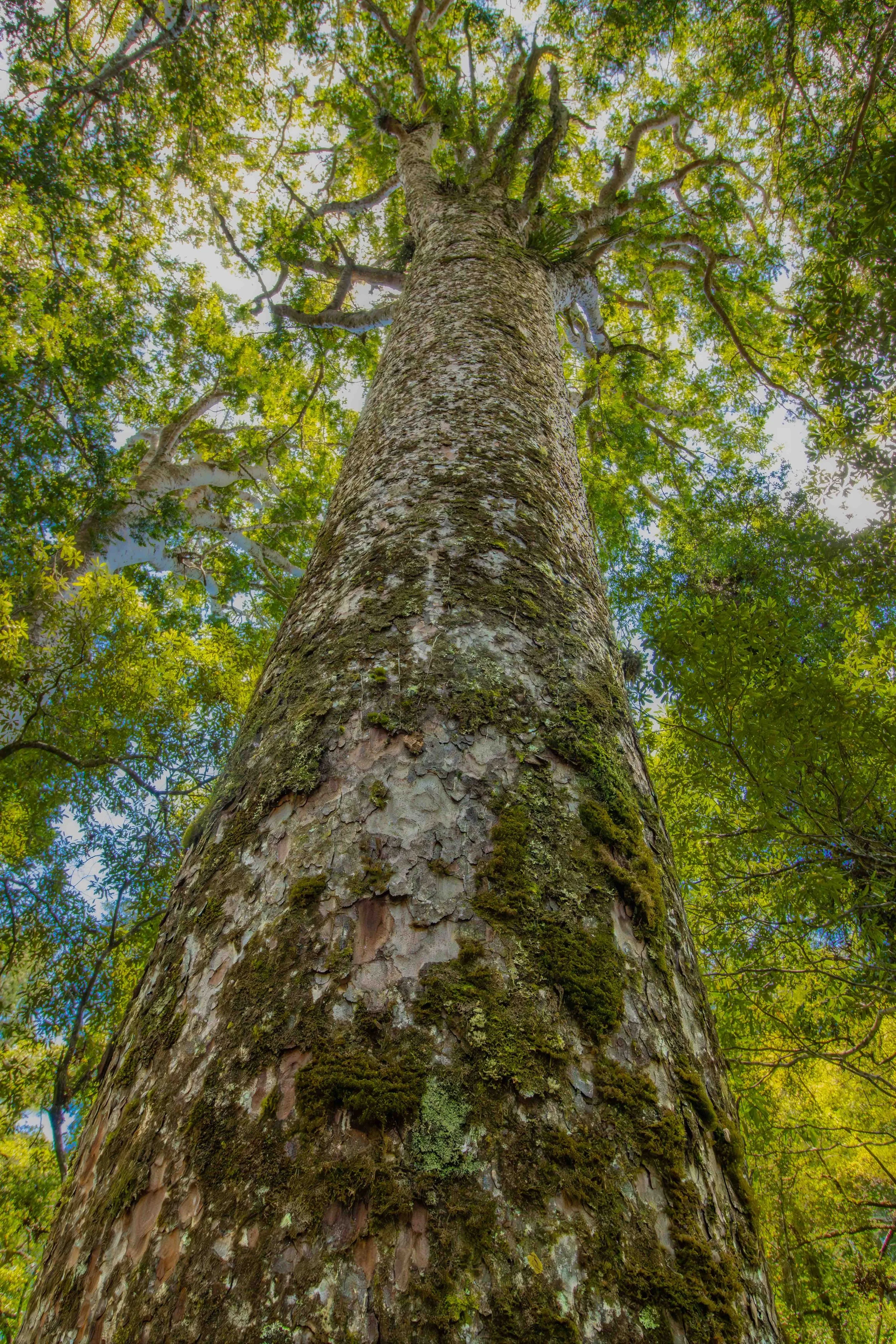
Textures and colours of the Kauri trees are incredible to see and touch.
When you stand beneath a giant kauri, it is difficult not to think about the generations that came before us and those that will follow. These trees have witnessed enormous changes in the landscape around them. They have survived storms, droughts, human exploitation and the passing of countless generations.
They remain standing.
Silent, powerful and ancient.
And as a photographer, my hope is that through my images I can capture just a little of that feeling—the Kings of New Zealand’s Forests—and share it with others.
Because sometimes the most powerful photographs are not simply pictures of what we see.
They are photographs of what we feel.