Best places to Photograph in the Fiordlands New Zealand
Photographing the Hidden Creeks of Fiordland
Contents and Photography by: Deon van Rooyen
There is something truly special about the temperate rainforest of Fiordland, New Zealand. Every step into the forest feels like entering another world. Ancient trees, moss-covered rocks, tumbling streams and hidden waterfalls create a landscape that seems to change with every turn.
Fiordland keeps many of its secrets well hidden—and it rewards patience. The longer you spend exploring, the more the forest begins to reveal itself.
Covering a vast and largely inaccessible wilderness, much of Fiordland cannot be reached by vehicle. Boats, hiking tracks and plenty of time on foot are often the only ways to reach its more remote corners. For landscape photographers, this is part of the attraction. Many photographers keep their favourite locations private, a practice that is widely understood and respected within the landscape photography community.
What is often overlooked is the amount of time, energy, planning and expense that can go into creating a single exceptional landscape photograph. Reaching the right location, waiting for the right weather and light, and sometimes returning again and again can make that final image all the more rewarding.
The sheer scale and beauty of Fiordland can be breathtaking. If you are visiting for the first time, or planning your own photographic adventure, here are a few places to get you started.
Make Milford Sound Your Base
If possible, allow yourself four or five nights in the Milford Sound area. Staying at Milford Sound Lodge, whether in the campervan site or the lodge itself, gives you a valuable base from which to explore.
Don't be discouraged by rain. In Fiordland, rain can be a photographer's greatest ally. Waterfalls appear from seemingly every cliff and mountainsides come alive with countless temporary streams. The rainforest becomes saturated with colour, mist hangs among the trees, and the entire landscape takes on a wonderfully atmospheric character
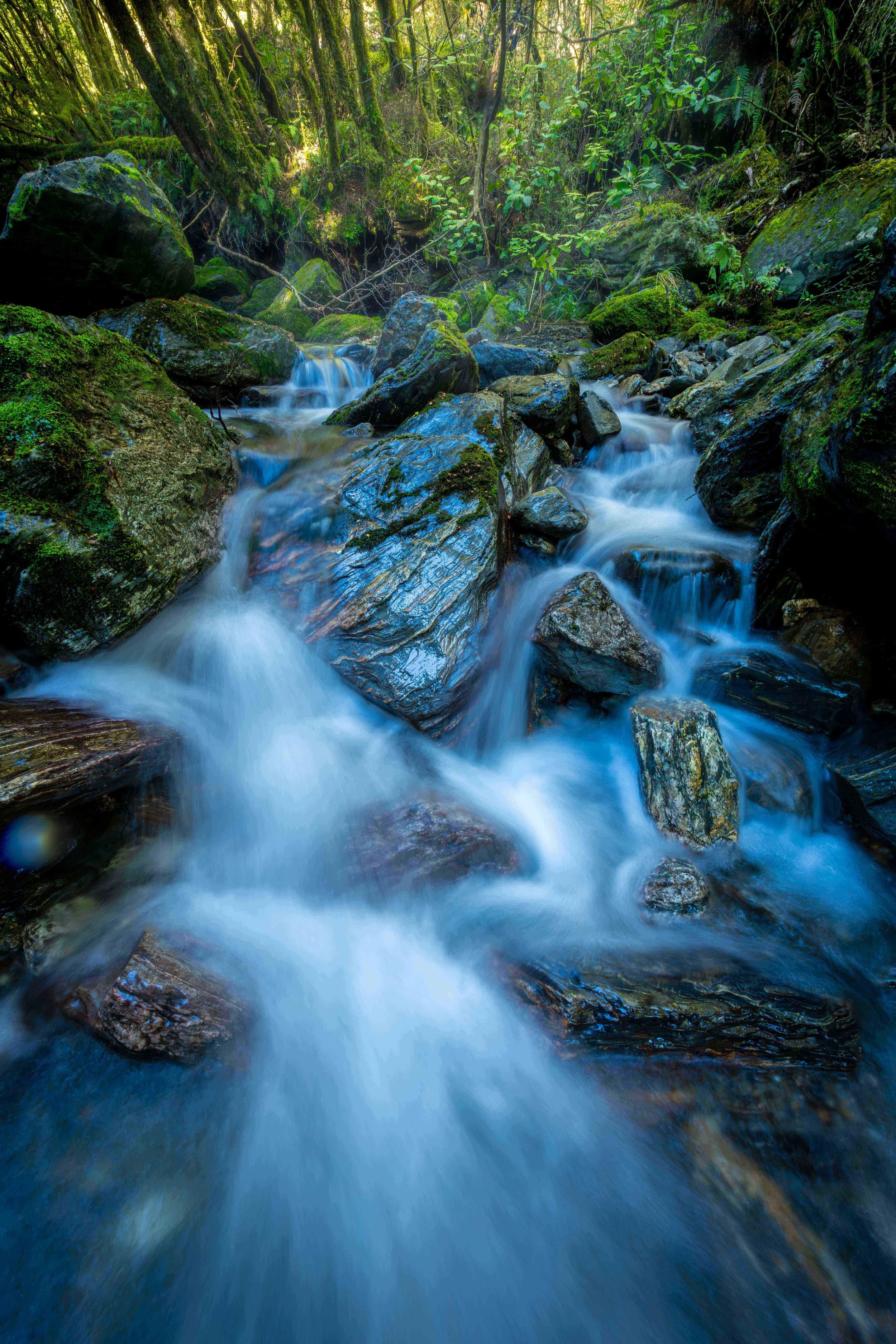
Tip, don’t slow your shutter speed too far down. Keep some of those water textures.
.
Milford Track — Sandfly Point to Giant Gate Falls
The final section of the Milford Track, from Sandfly Point towards Giant Gate Falls, can provide an excellent day of photography.
The track passes through spectacular rainforest, with opportunities to photograph moss-covered trees, winding pathways, streams and waterfalls. Take your time rather than simply walking from one point to another. Some of the most rewarding compositions can be found by slowing down and looking closely at what is happening around the track.
TūtokoTrack
Only a short distance from the Milford Sound area, the TūtokoRiver and surrounding track offer another opportunity to explore the rainforest.
The track follows the river for a short distance before turning northwards into the forest. Here, spectacular rainforest scenes await, with moss, native vegetation, rocks and flowing water providing endless opportunities for intimate landscape photographs.
Along the track, several small creeks cross the forest, each offering the possibility of discovering your own composition.
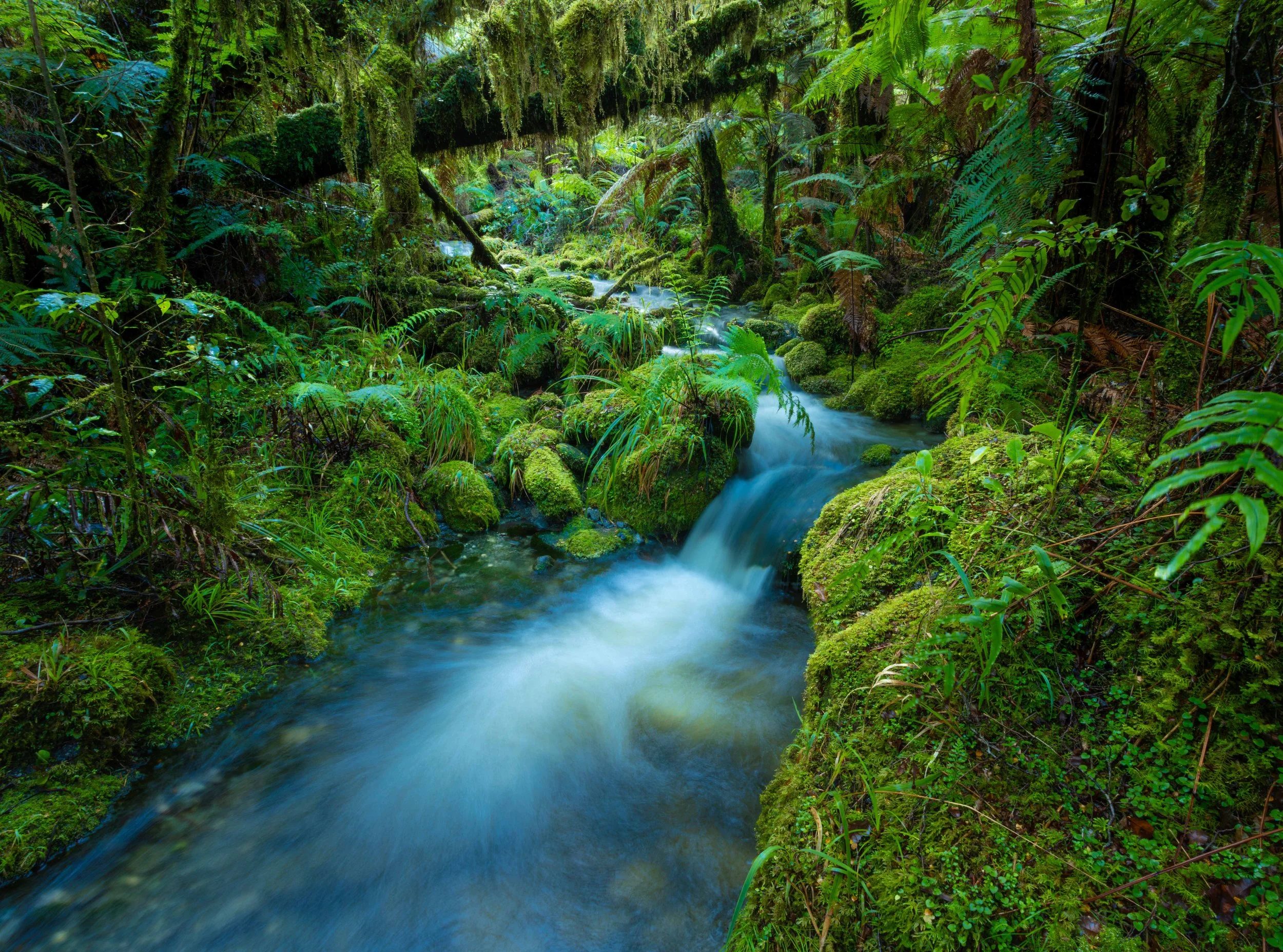
Look Beneath the Road
Some of Fiordland's photographic treasures can be found in the most unexpected places.
Numerous creeks flow beneath the road to Milford Sound through culverts as water pours down from the surrounding mountains. Drive slowly and keep an eye out for these smaller waterways.
Where it is safe and legal to stop, park well clear of the road and explore on foot. Follow the creek upstream or downstream and see what you discover. A seemingly insignificant stream from the road can quickly transform into a beautiful photographic scene once you enter the forest.
Always put safety first around roads, fast-flowing water and steep terrain.
Marian Falls
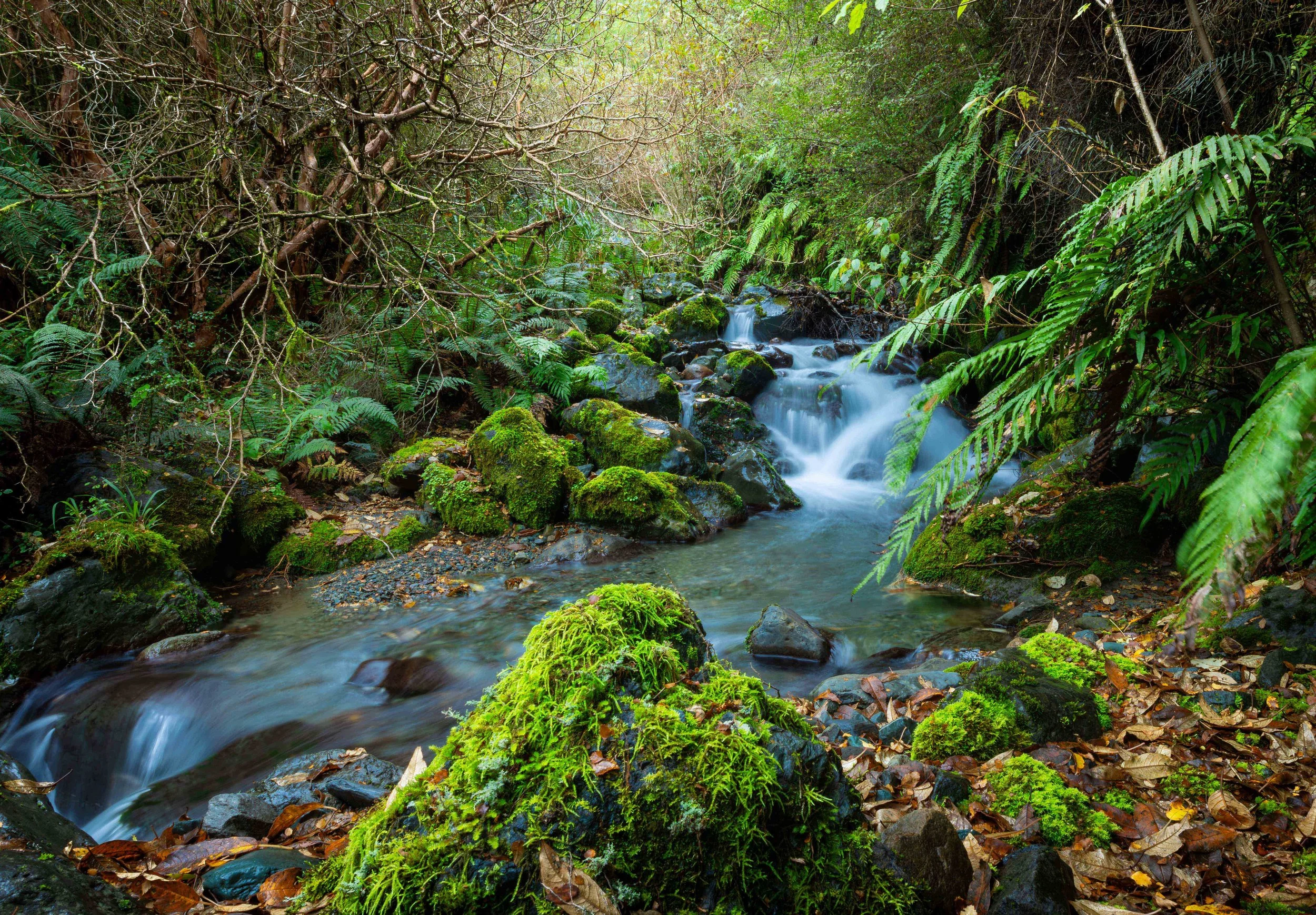
Just off the main road, Marian Falls is another worthwhile location for photographers looking to stretch their legs and explore the surrounding landscape.
The combination of flowing water, native forest and the rugged Fiordland environment provides plenty of opportunities to experiment with longer exposures and intimate compositions.
Falls Creek Falls
Falls Creek Falls is another spectacular waterfall accessible from the main road.
Park in the designated area and make your way towards the main falls. For those looking for a more challenging perspective, a steep track leads higher above the waterfall, providing different viewpoints and a greater sense of the surrounding landscape.
As always in Fiordland, take care around wet rocks, steep slopes and fast-moving water.
Go Beyond the Obvious
These locations are really only the beginning. Fiordland is a place where slowing down, exploring and being willing to look beyond the obvious can lead to some of the most rewarding photographic experiences.
You don't necessarily need a famous viewpoint or dramatic mountain panorama to create a memorable image. Sometimes the photograph is hidden in a small creek, a moss-covered branch, a curtainf rain or a waterfall that appears only after a night of heavy weather. The real adventure is finding those moments for yourself.
Camera Settings
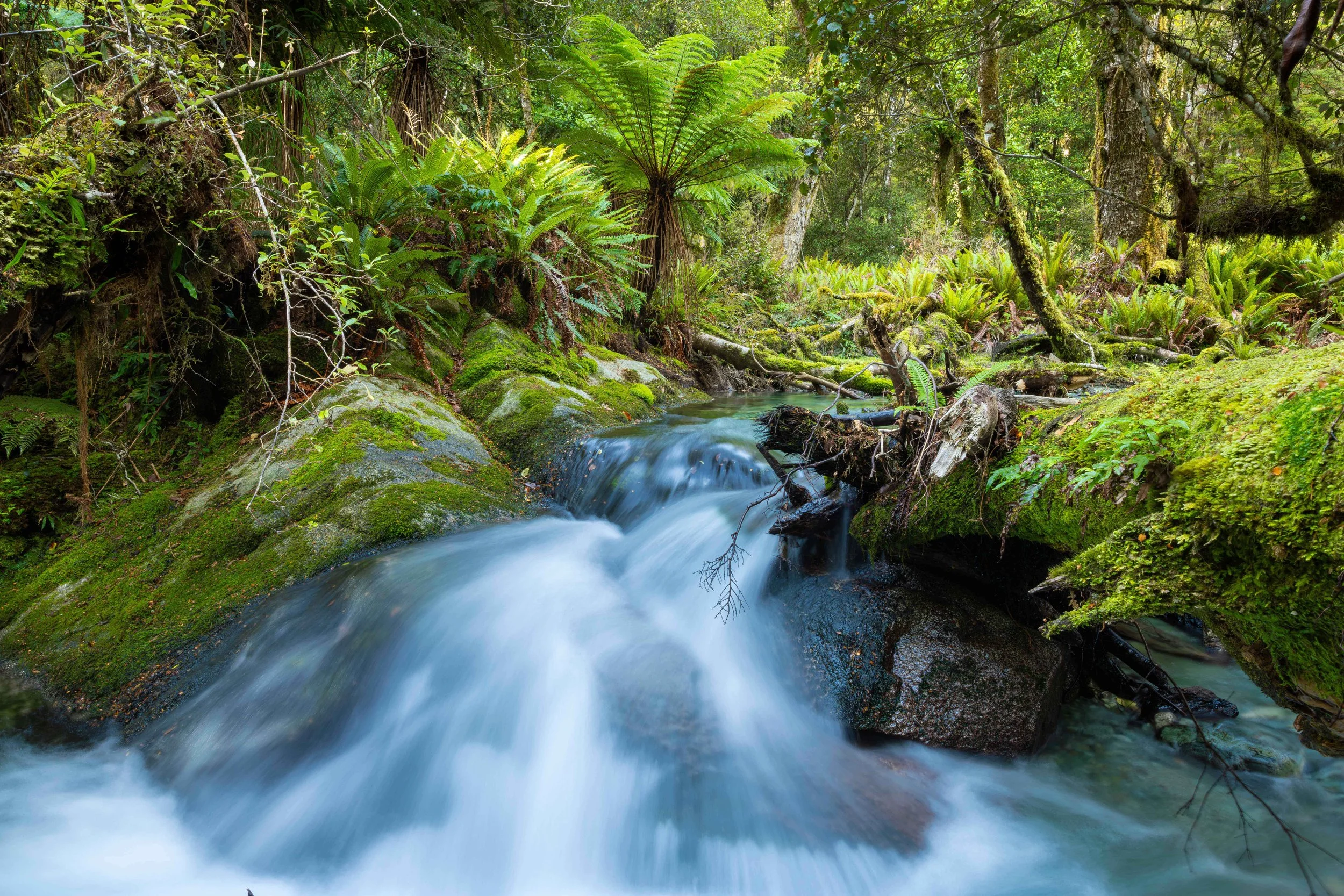
My starting point for photographing the creeks and waterfalls of Fiordland is generally Manual mode, ISO 320, and an aperture between f/11 and f/16. On a tripod, I will often use a shutter speed around 0.8 seconds, depending on the speed and character of the water.
I also use a two-second shutter timer to allow the camera to settle after pressing the shutter release.
For this type of landscape photography, my go-to lens is a 14–35mm wide-anglezoom, which provides enough flexibility to capture both intimate creek scenes and the dramatic scale of the surrounding rainforest.
Ultimately, though, there is no single perfect setting. Watch the light, study the movement of the water and experiment. Fiordland changes constantly—and that is precisely what makes photographing it so rewarding.