A small bird that has stolen my heart
There are many birds I have had the privilege of photographing throughout New Zealand, but one that has captured a particularly special place in my heart is the North Island dotterel.
These small, beautifully camouflaged shorebirds may not immediately attract the attention of people walking along New Zealand's beaches and estuaries. Yet, spend some time quietly observing them and you soon discover that there is far more to these little birds than meets the eye. They are intelligent, alert and surprisingly entertaining, and every encounter has given me a greater appreciation for their remarkable behaviour.
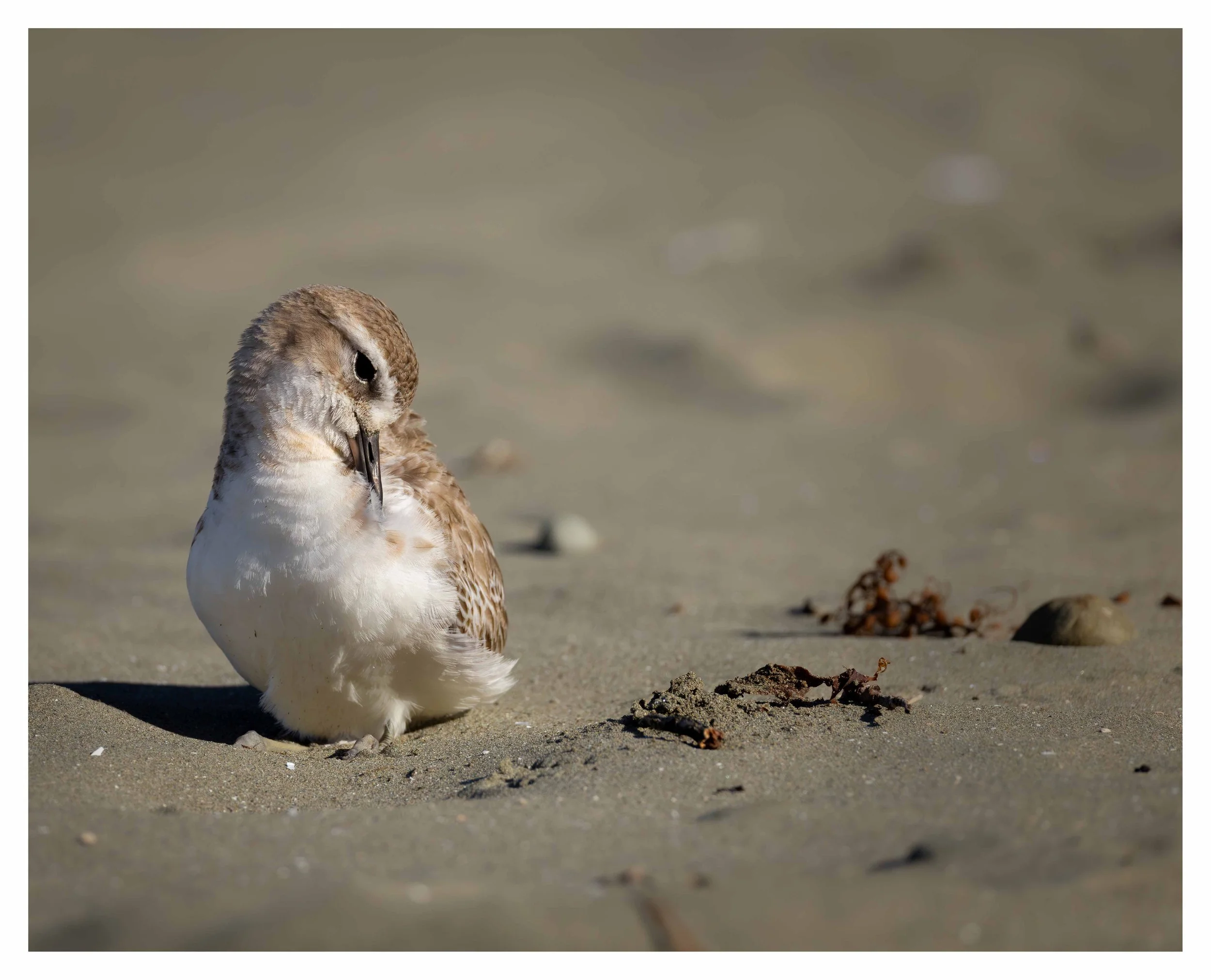
The New Zealand North Island Dotterel grooming in the late afternoon winter sun
A Special Bird of New Zealand's Coastline
The North Island dotterel is found along coastal beaches, sandspits and estuaries throughout parts of the North Island. Their sandy-brown colouring provides excellent camouflage, allowing them to blend almost perfectly into their surroundings.
In fact, they are so well camouflaged that many people walking along the beach probably pass within metres of them without ever realising they are there.
For me, this is part of their attraction. You have to slow down, look carefully and become aware of your surroundings. Wildlife photography isn't always about finding the biggest or most spectacular animal. Sometimes it is about discovering the beauty in something small that most people simply walk past.
The North Island dotterel is also an endangered species, making every encounter with these birds even more meaningful. Photographing them isn't simply about creating beautiful images; it is also an opportunity to appreciate and raise awareness of one of New Zealand's precious coastal birds.
Photographing in the Afternoon Light
I usually photograph dotterels in the late afternoon, when the harshness of the midday sun has disappeared and the light becomes softer and warmer.
This beautiful evening light brings out the warm brown and golden tones in their plumage and creates a much more pleasing atmosphere in photographs. There is something magical about watching a dotterel moving across the beach as the setting sun creates a warm glow around its feathers.
Winter afternoons can be particularly rewarding. The birds seem to enjoy sitting in the soft afternoon sunshine, grooming themselves, stretching their wings or simply settling down for a quiet snooze.
And then, occasionally, they put on a little performance.
I have watched them stretch their bodies and legs in ways that almost resemble ballerinas warming up before a performance. They groom their feathers meticulously, stretch their wings and legs, and then suddenly settle down as though nothing happened.
But despite their relaxed appearance, there is always one constant:
They are watching you.
Even when they appear to be sleeping, one eye often seems to remain open, keeping track of every movement I make.
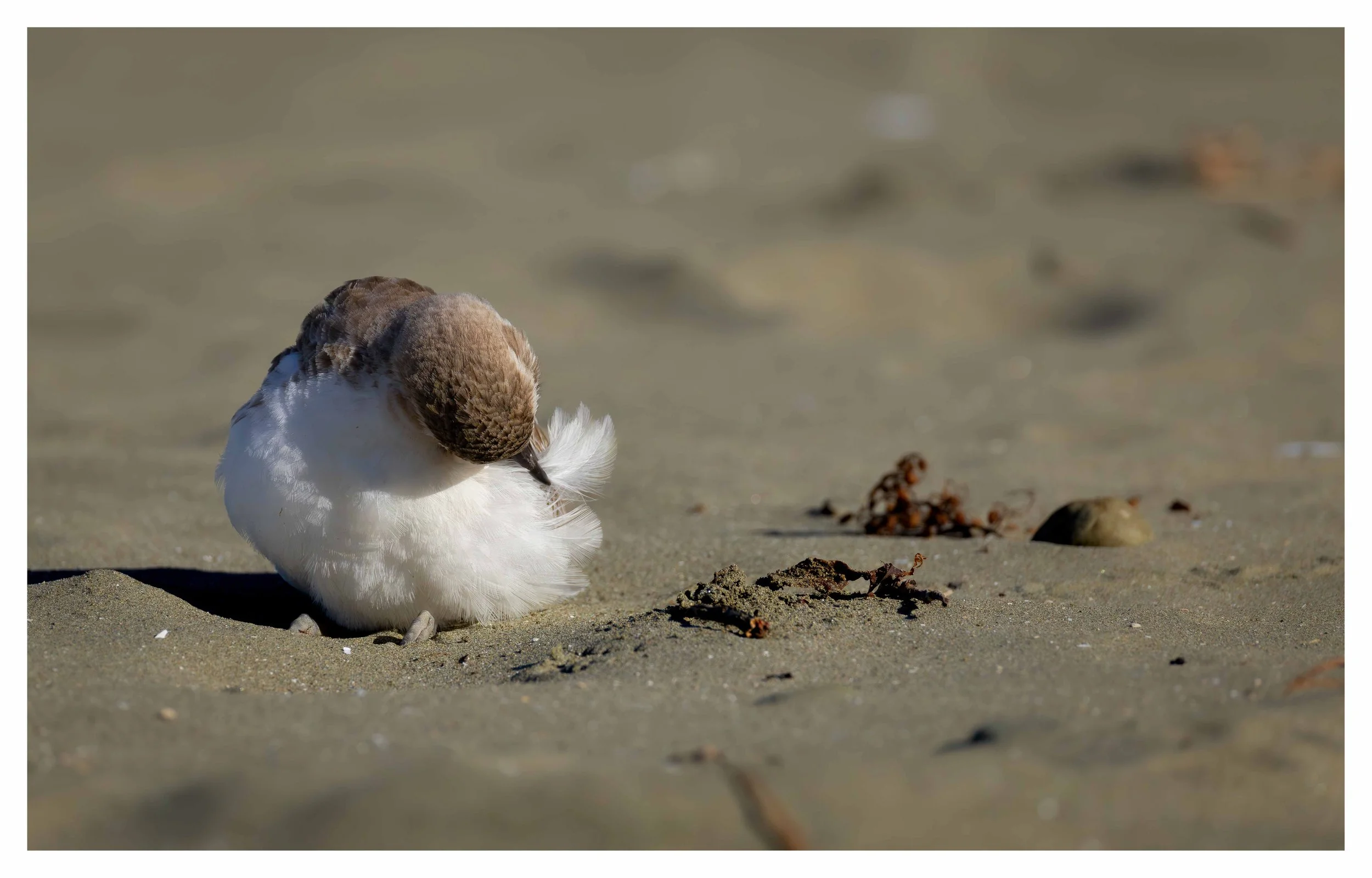
The New Zealand North Island Dotterel grooming in the late afternoon winter sun
Getting Close Without Disturbing Them
One of the most important lessons I have learnt from photographing wildlife is that patience is often more valuable than expensive equipment.
When photographing dotterels, I try to approach them very slowly. Rather than walking directly towards them with a camera raised to my eye, I take a few slow steps and then stop. Eventually, I find a suitable position on the beach, sit down and simply remain still.
This is where patience becomes your greatest photographic tool.
Once you are sitting quietly, the birds can gradually become more comfortable with your presence. If you are lucky, they may eventually continue with their normal behaviour rather than moving away.
On some occasions, I have managed to get within approximately 10 metres of them.
At that distance, with a long telephoto lens, it is possible to capture detailed portraits while still giving the birds plenty of space.
The key is not to chase them.
Let the bird decide how close it wants you to be.
My Camera Settings
For these photographs I used a Canon EOS R5 Mark II paired with the Canon RF 200-800mm lens, shooting at f/9.
For many years I photographed wildlife using Manual exposure. However, after spending time on a professional wildlife photographic safari, I changed the way I approached my camera settings.
I discovered that Aperture Priority can be an incredibly effective setting for wildlife photography, particularly when photographing birds where the light and background can change constantly.
For this particular session, my settings were approximately:
Camera: Canon EOS R5 Mark II
Lens: Canon RF 200-800mm
Exposure mode: Aperture Priority
Aperture: f/9
ISO: 2000
Exposure compensation: -2 stops
Shutter speed: Up to 1/8000 sec
The fast shutter speed was particularly useful for ensuring crisp, sharp images when the birds moved suddenly. Even a seemingly relaxed dotterel can unexpectedly take off, stretch its wings or move quickly across the sand.
Using Aperture Priority allowed me to concentrate more on the bird and its behaviour rather than constantly adjusting shutter speed manually.
For me, this is one of the great advantages of wildlife photography: the camera should work for you, allowing you to concentrate on the animal in front of you.
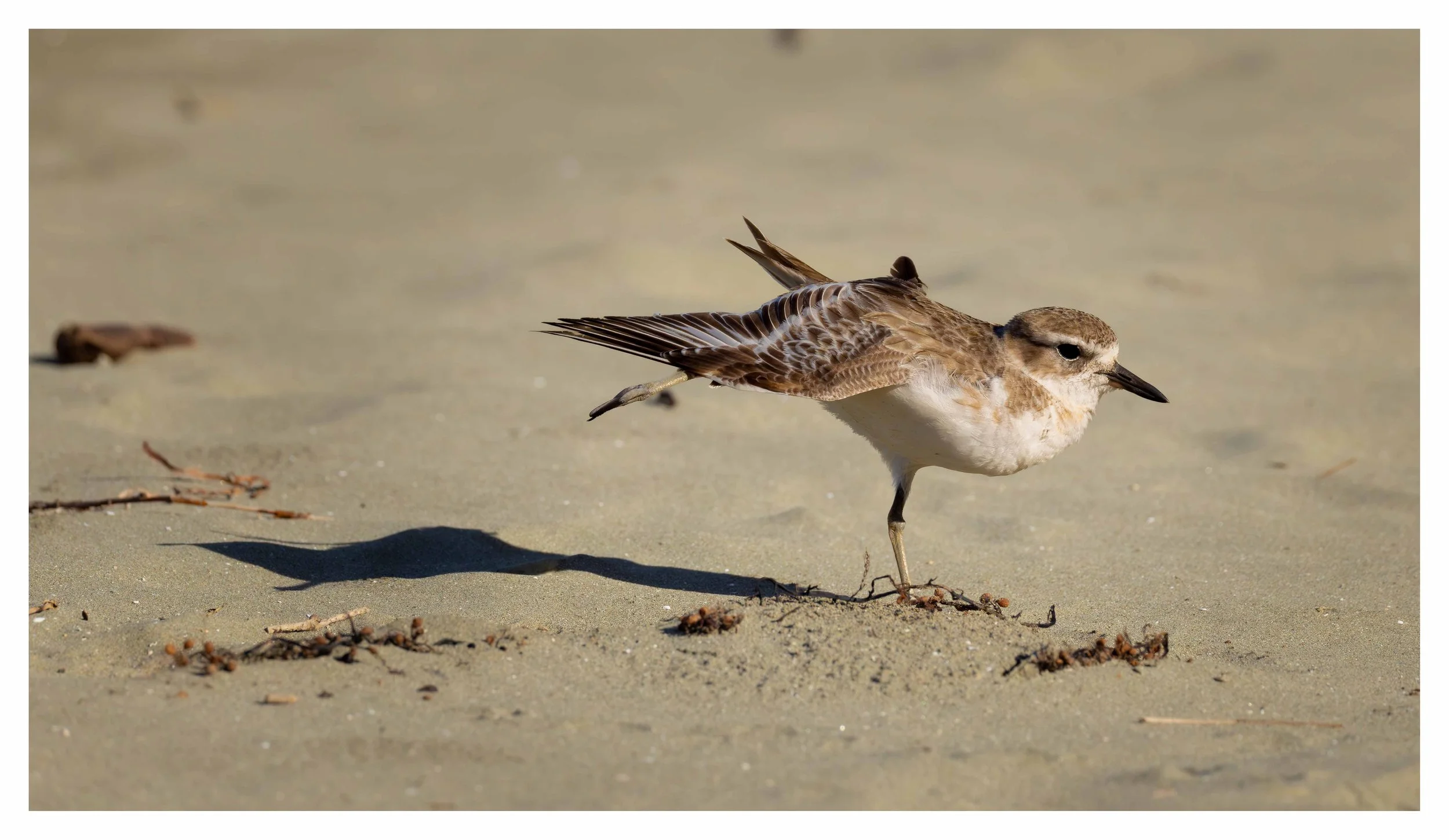
A stretching and balancing act, like a bit of afternoon yoga
The Art of Waiting
Wildlife photography can sometimes involve long periods of doing absolutely nothing.
You sit.
You wait.
You watch.
And you wait some more.
But those quiet moments are often when the magic happens.
Sitting motionless on the beach gives you time to observe the birds rather than simply photographing them. You begin to notice their behaviour, their interactions and their individual personalities.
A dotterel may groom itself, stretch its wings, walk slowly along the shoreline, search for food or settle down for a rest.
Then, without warning, something happens.
A bird stretches.
Another runs across the sand.
One suddenly takes flight.
And if you have been patient and ready, you may capture that fleeting moment.
Masters of Distraction
One of the most fascinating behaviours of dotterels is the way they attempt to protect their nests and young.
Like many ground-nesting birds, they have developed remarkable strategies for dealing with potential predators and intruders.
If a dotterel feels that its nest or chicks are threatened, it may attempt to draw attention away from them by pretending to be injured. The bird can perform a distraction display, encouraging the perceived threat to follow it away from the vulnerable young.
It is an extraordinary example of instinct and parental protection.
Watching this behaviour reminds me that there is an entire world of wildlife behaviour taking place around us that most people never notice.
And that is perhaps one of the greatest rewards of wildlife photography.
The longer you spend with an animal, the more you begin to see.
Photographing With Respect
When photographing endangered wildlife, the welfare of the animal must always come before the photograph.
A great image is never worth disturbing a bird, causing it stress or putting its nest or young at risk.
With dotterels, this is particularly important because their nests can be extremely difficult to see. Their camouflage allows them to blend into the sand and surrounding vegetation remarkably well.
A photographer needs to be constantly aware of where they are walking and where the birds are located.
I always try to let the birds dictate the encounter. If they become uncomfortable, I move away. If they remain relaxed, I stay still and allow them to continue their natural behaviour.
The photograph is secondary.
The bird comes first.
From Beach Encounter to Finished Photograph
Once I have captured the images, I bring them into Adobe Lightroom Classic for post-processing.
My approach is generally to enhance what was already present rather than create something completely different. I want the warmth of the afternoon light, the subtle colours of the dotterel and the natural character of the beach to remain authentic.
A good wildlife photograph begins in the field. Post-processing can enhance an image, but it cannot replace good light, careful composition, patience and an understanding of animal behaviour.
I also enjoy sharing what I have learnt about photography and post-processing, and I have free editing tutorials available on my YouTube channel for photographers who would like to learn more.
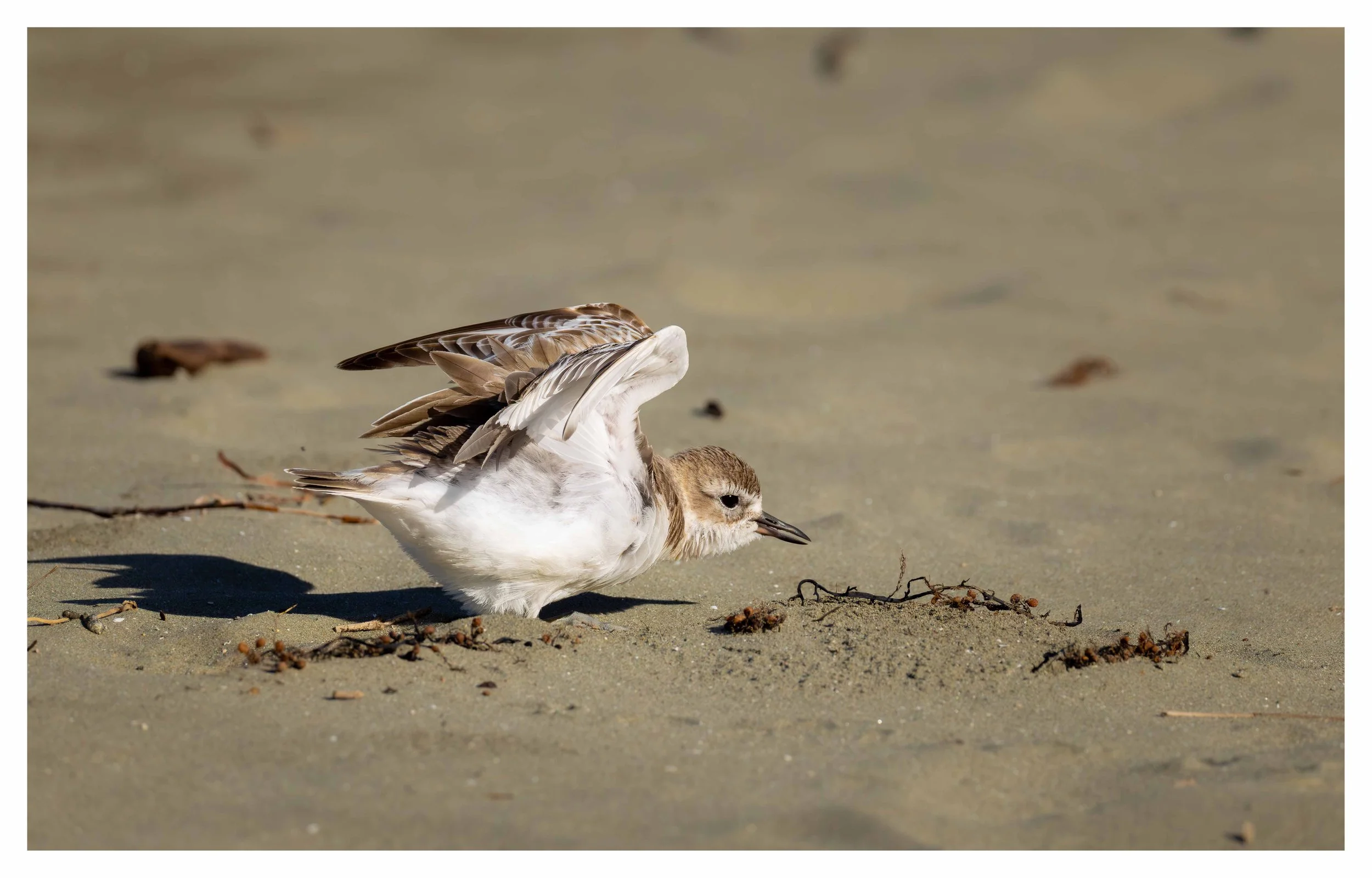
The New Zealand North island Dotterel
A Small Bird That Has Stolen My Heart
The North Island dotterel may be small, but spending time with these birds has given me an enormous appreciation for them.
They have taught me the value of slowing down, sitting quietly and simply observing. They have reminded me that some of the most rewarding wildlife encounters aren't necessarily with the largest or most dramatic animals.
Sometimes they are found quietly walking along a New Zealand beach, almost invisible against the sand.
Sometimes they are stretching like ballerinas in the winter afternoon sun.
Sometimes they are sleeping with one eye open.
And sometimes they are watching us far more carefully than we are watching them.
For me, photographing the North Island dotterel is about much more than taking photographs. It is about spending time in their environment, witnessing their behaviour and hopefully helping others appreciate these remarkable little birds.
They may be small and easily overlooked, but once you have spent time with a North Island dotterel, they are very difficult to forget
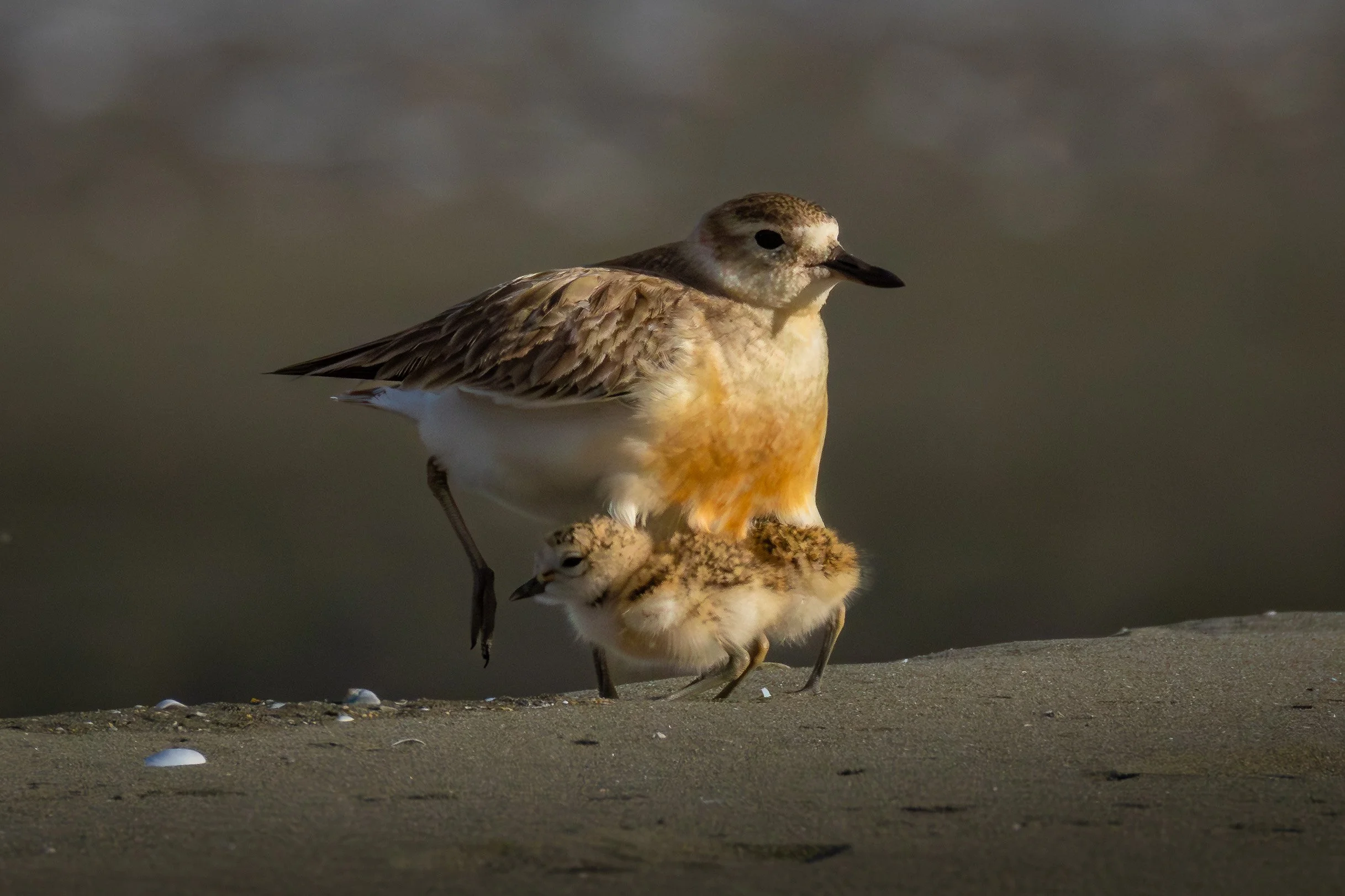
The New Zealand North Island Dotterel