Travel tips for an African Wildlife Photo Safari
Essential Travel Tips for an Unforgettable African Photo Safari
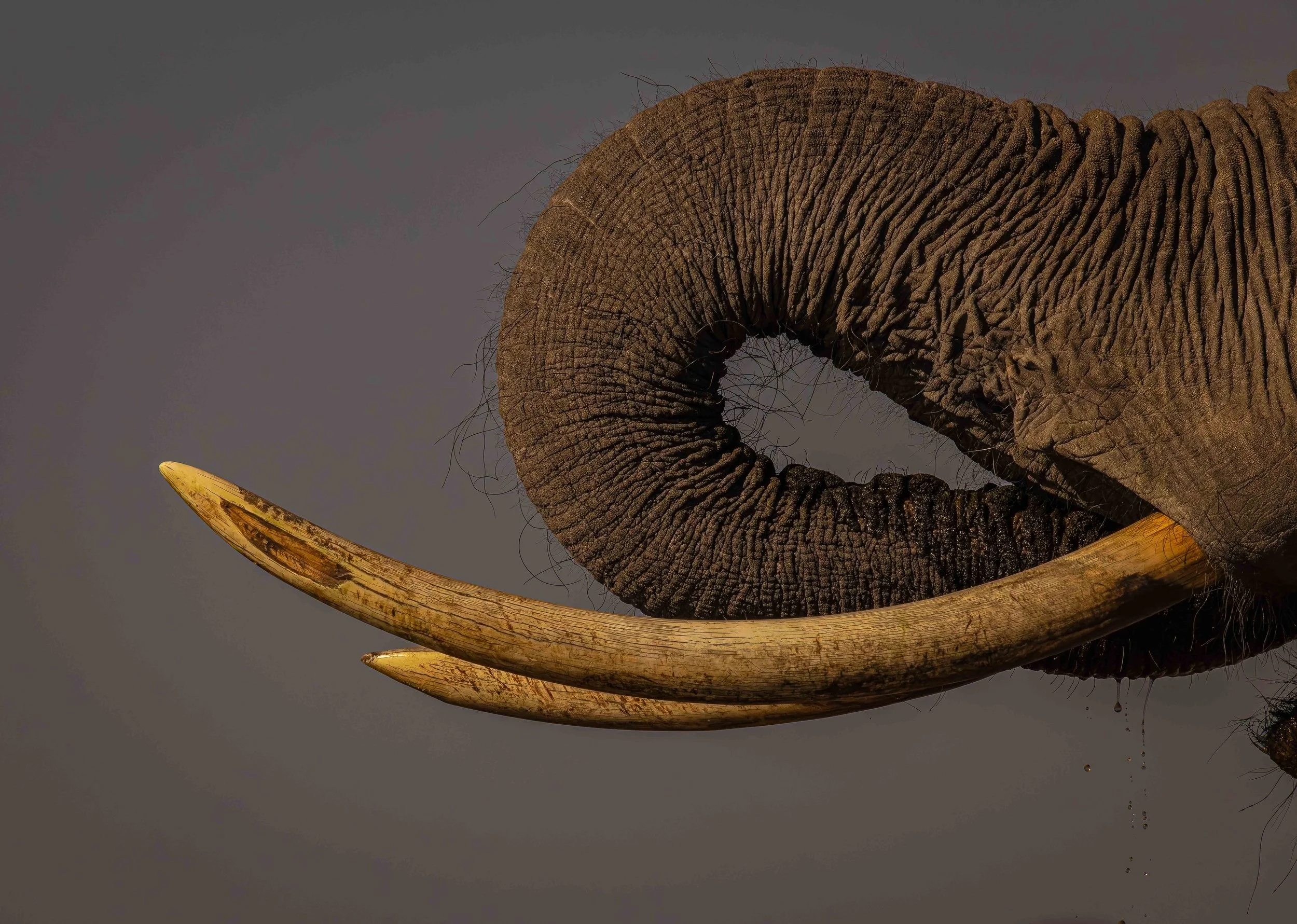
Elephant quenching its thirst on the Chobe River in Botswana.
There are few travel experiences that compare to an African photo safari. Watching elephants cross the plains at sunrise, photographing a leopard resting in a tree, or hearing lions roar after sunset creates memories that last a lifetime. Whether you're a seasoned wildlife photographer or simply love capturing moments with your camera, a little preparation will help you make the most of your adventure.
As a Traveller you invest a lot of your time and money in wanting the ultimate Safari experience. This article will help you to get you on your way.
1. Choose the Right Safari Destination
Africa offers an incredible variety of safari experiences. Consider what wildlife you most want to photograph.
Explore the under rated and not so crowded Zululand in South Africa, that offers world class Private Safari Game Lodges. Below is a detailed Photo Safari Guide to Zululand, including Camera gear tips, Camera Settings, Safety Travel tips, contacts and much more information.
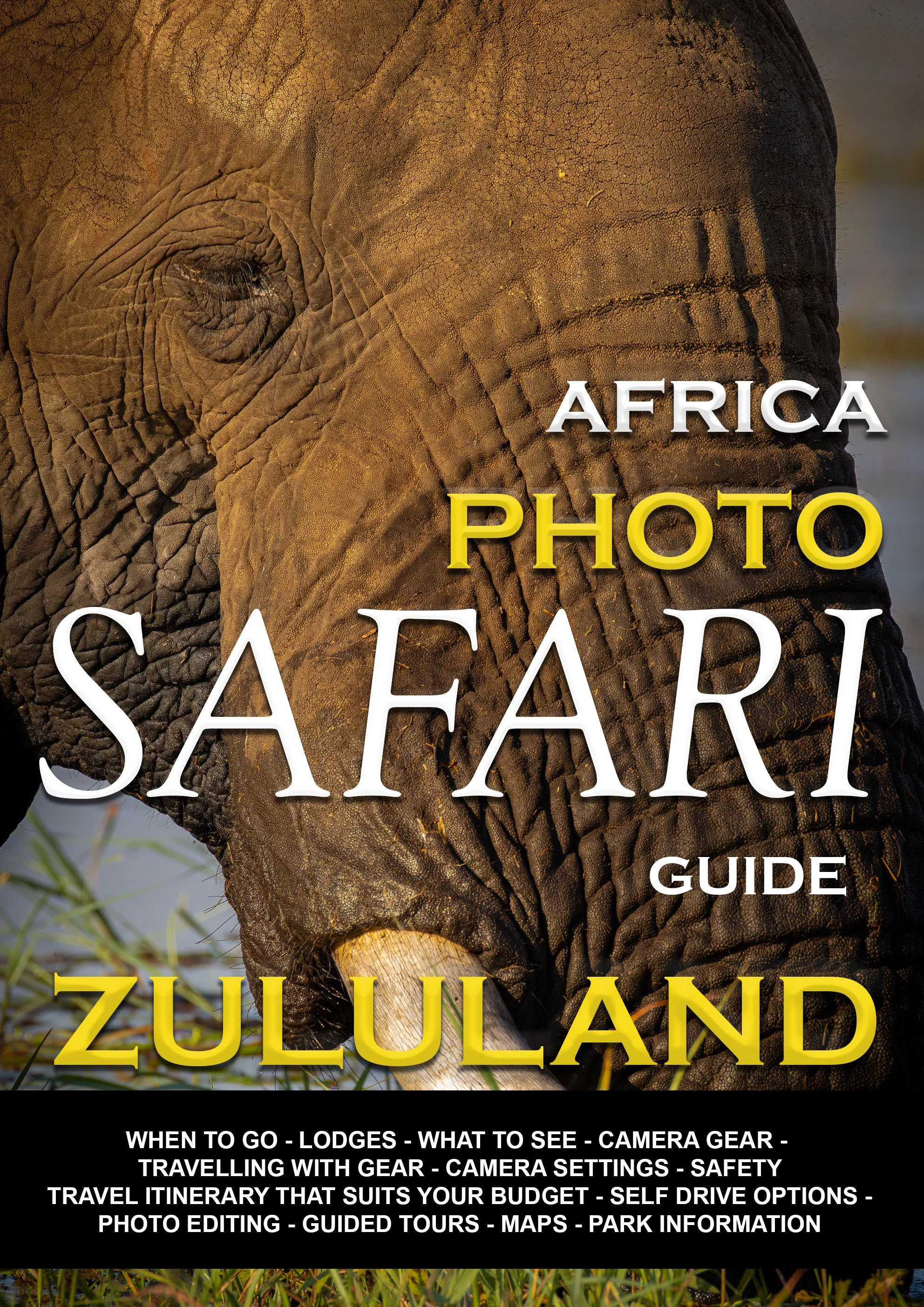
A downloadable eBook. A guide (eBook) to assist you in planning your next Safari, with options ranging from five-star luxury Safari Lodges to self-drive Safari options, safety travel tips, itineraries suiting your style and budget, Camera Gear, Camera Settings, Compositions, Photo editing, travelling & flying with camera gear, Must- see places to visit, Park information, Safari Lodge contacts and many more tips to make your next Safari to Zululand unforgettable.
Kenya and Tanzania are famous for the Great Migration, but can get overcrowded.
Botswana offers exceptional water-based safaris and abundant wildlife, like Chobe River in Kasane. For professional Photographic excursions on the Chobe River with boats that are rigged out for Photographers, try CNP Safaris. (link below)
Chobe River Photographic Boat Safari – Botswana | CNP Safaris CNP Safaris
South Africa combines excellent game viewing with luxury lodges and self-drive options, like the Kruger Park.
Namibia features dramatic desert landscapes and unique desert adapted wildlife photography opportunities, which I frequently travel to offering Photographic Safari Workshops.
Zambia and Zimbabwe are ideal for walking safaris and more remote experiences, especially the Lower Zambezi.
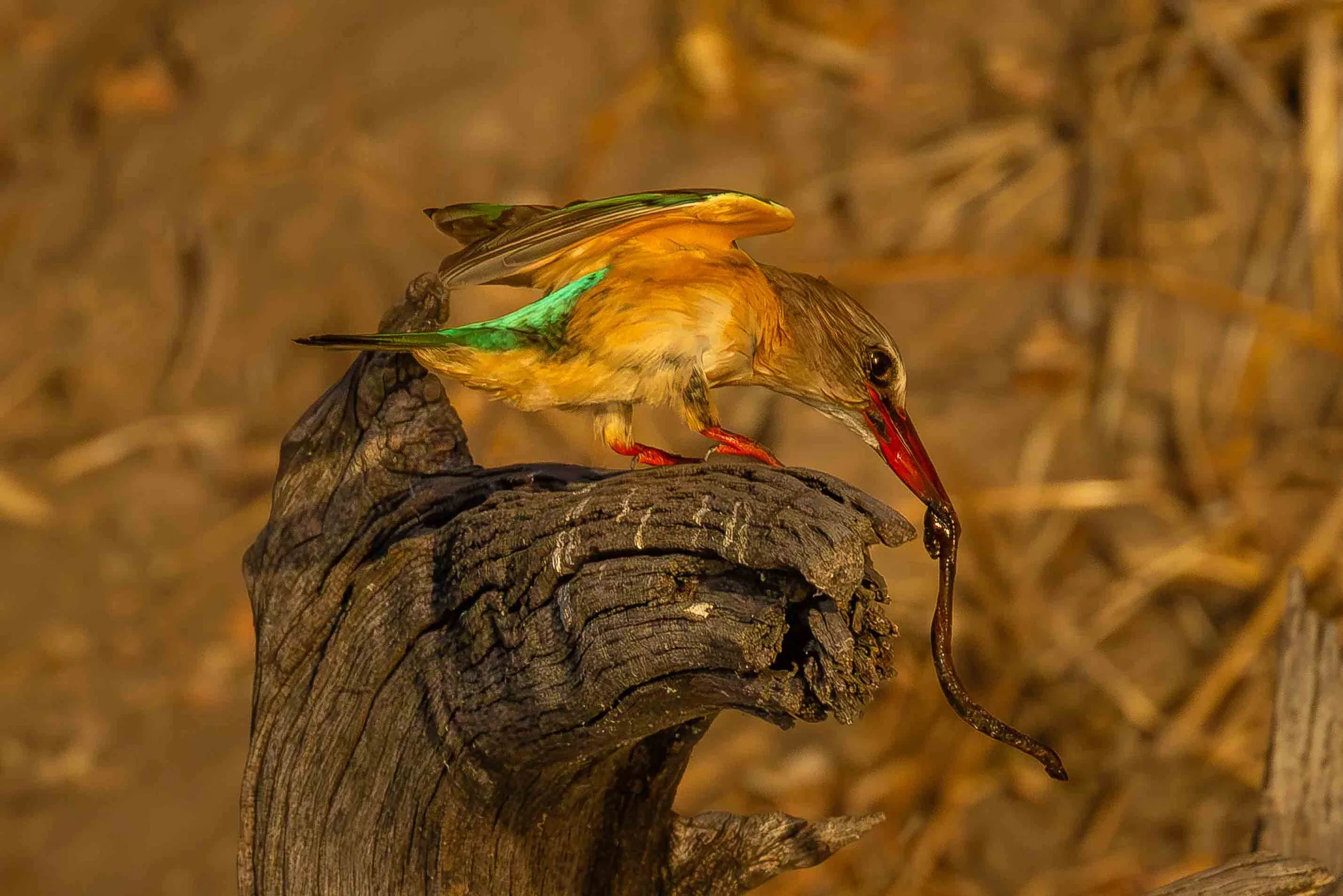
Photo by Deon van Rooyen (www.deoncamera.com) A Brown hooded Kingfisher comes into land with its next meal on the Chobe River in Botswana. (Print available online store, click on Image)
Research the best season for your chosen destination, as wildlife sightings often vary throughout the year. Peak Season is during the drier winter months. Don’t forget to look at ‘shoulder’ seasons either side of winter, which can offer more dramatic skies in your photography.
TIP - Look at Safari options that include a morning and sunset Game Drive excursion. Also check that all Airport Transfers are included, as this takes the stress of trying to rent a vehicle and driving yourself in unfamiliar territory.
2. Pack Smart, Not Heavy
Many safari flights have strict luggage weight limits, so every kilogram counts, especially when travelling with Camera Gear.
Essentials include:
Neutral-coloured clothing (khaki, olive, beige, or brown.)
Lightweight layers for cool mornings and warm afternoons. Keep in mind that when travelling during the dry winter months, some locations temperatures can drop down to zero degrees centigrade during clear night skies.
TIP - Wear your heavy boots or gear whilst travelling as it will minimize weight of your main suitcase.
Comfortable walking shoes that cover the ankles.
Wide-brimmed hat
Sunglasses
High-SPF sunscreen
Insect repellent. Check if you will be travelling into a malaria area. (especially after the rainy seasons). Check in with your health practitioner on what anti malaria medication you should take.
Reusable water bottle. Always drink bottled water and be cautious when asking for ice in your drinks.
Small backpack for daily excursions
Avoid bright colours and camouflage clothing, as camouflage is restricted in some African countries.
TIP - Do not pack any camera batteries, including GoPro batteries in your check-inn luggage. You run the risk of this being removed from your bags when x-rayed. Place heavier replaceable items like a travel tripod in your suitcase, as well as in expensive items that can easily be replaced on arrival. Use a Camera Backpack with an insert shell that holds your camera bodies and lenses. This can also be removed from your backpack, should the overhead compartments get full, so that you can keep your expensive equipment in sight near you.
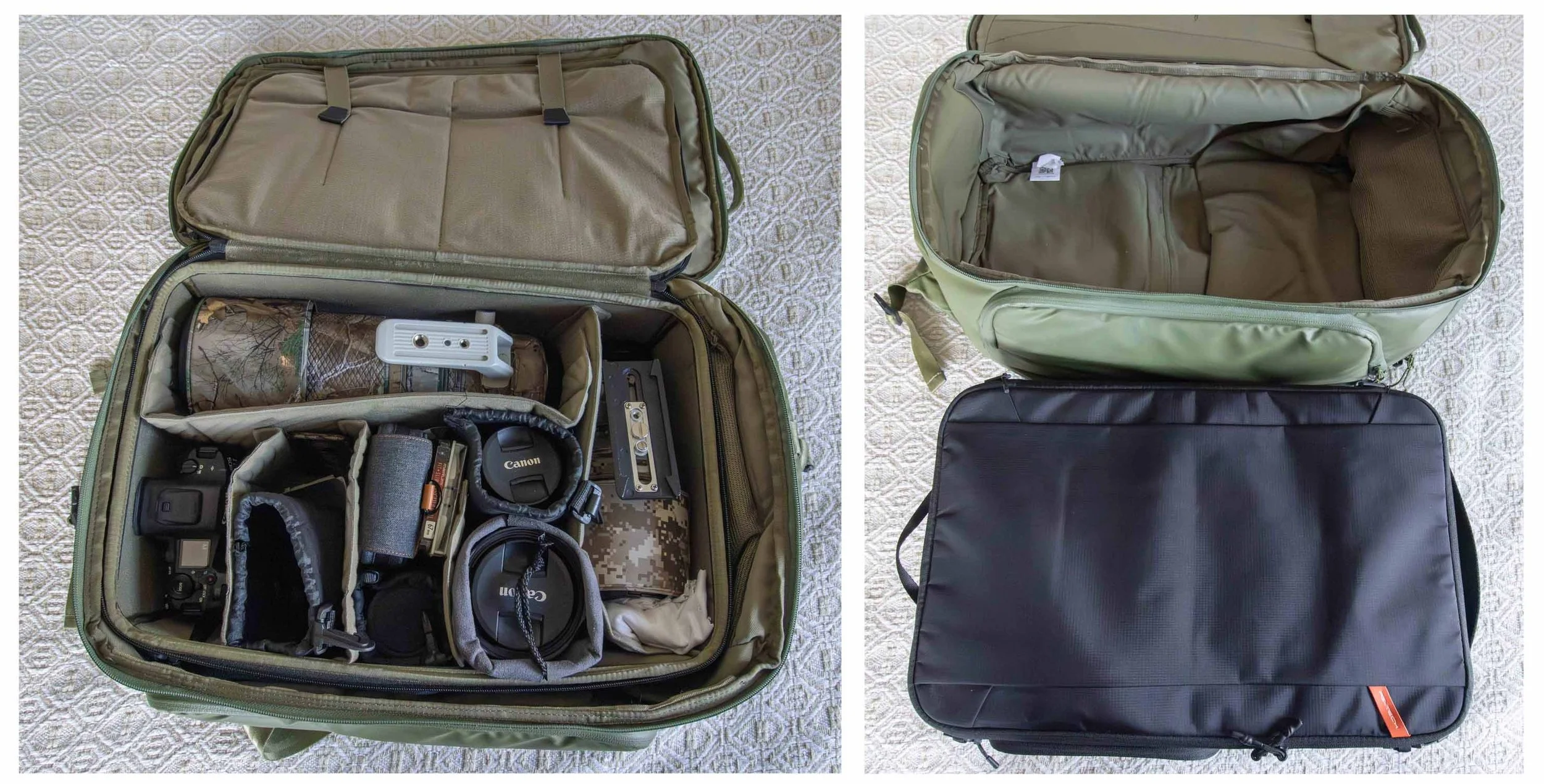
Choose a Camera Backpack that can hold a removeable insert shell. This makes travelling easy in the event you are challenged with overhead compartment space on an airplane. TIP- don’t be the last person to board as overhead space will fill up quickly
3. Bring the Right Camera Gear
Wildlife often keeps its distance, so the right equipment makes a significant difference.
Recommended gear includes:
DSLR or mirrorless camera (You can pick up great used camera bodies at a reputable Camera Shop, which will save you hundreds of dollars)
Telephoto lens (200–600mm is ideal) or 200-800 (Canon RF f9). Look at rental options and do your cost calculations.
Wide-angle lens for landscapes 14-35mm (ideal for astro photography or 24-70mm for more landscape shots)
Extra batteries
Plenty of memory cards
Lens cleaning cloth
Bean bag for stabilising your camera on safari vehicles. This is lightweight and can be packed empty. Once you get to your location your bean bag can be filled with dry river sand of uncooked rice and emptied before departure.
Portable hard drive or cloud backup solution. Use an SSD like a SANDISK Pro.
4. Master the Golden Hours
The best wildlife photographs are usually taken shortly after sunrise and before sunset.
These "golden hours" provide:
Softer light
Richer colours
More active wildlife
Dramatic shadows
Beautiful skies
Most Safari Lodges arrange all Game Drives during golden hours.
TIP- Some Safari Lodges offer Private Game Guide with a vehicle that can dedicate what you would like to photograph. If you can afford this, then give it a go. This way you will avoid an overcrowed vehicle.
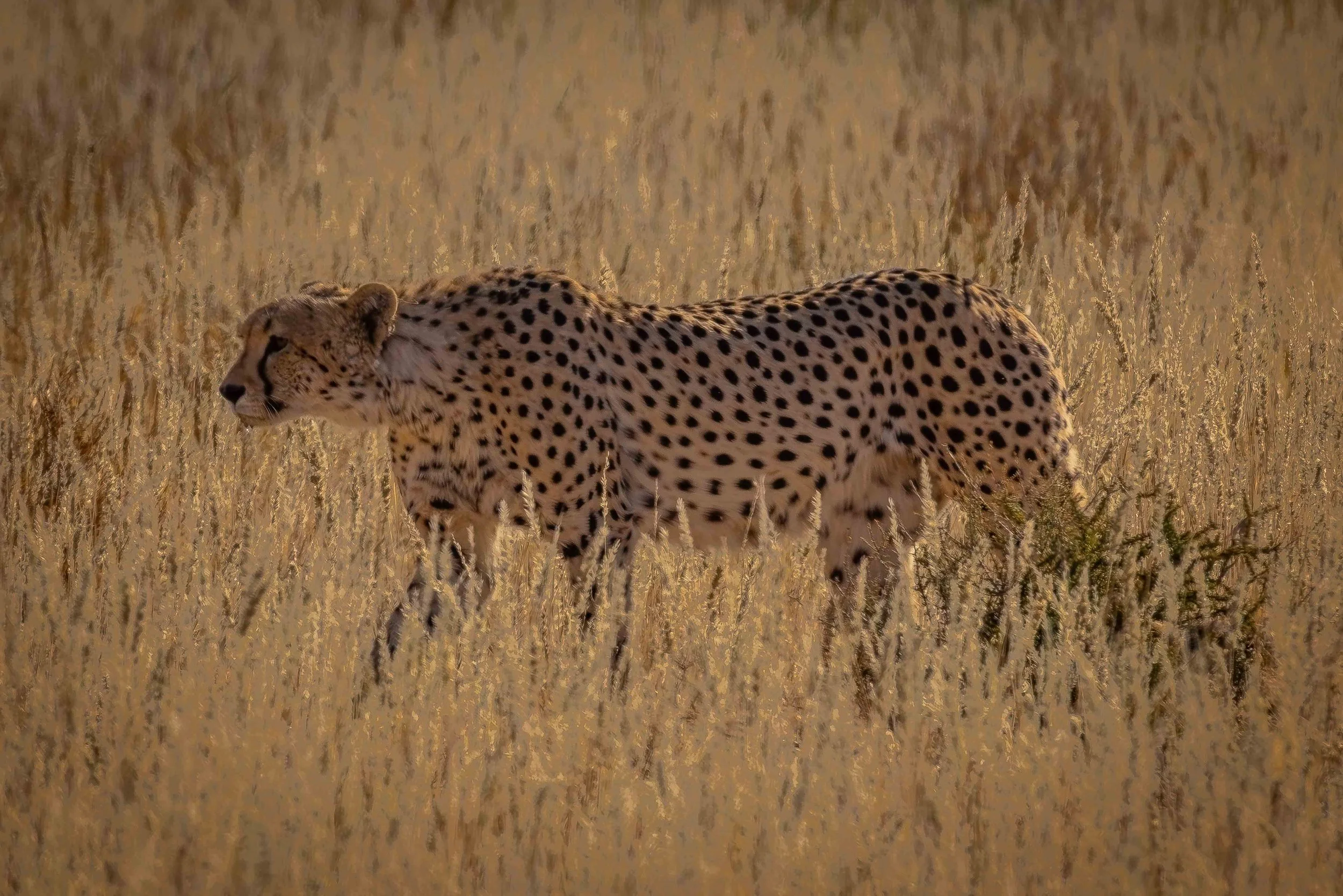
Photo by Deon van Rooyen (www.deoncamera.com) A Cheetah walks through winter golden light reflecting off the Kalahari Desert in the Kgalagadi Transfrontier Park in South Africa.
5. Learn Animal Behaviour
Understanding wildlife behaviour can dramatically improve your photography.
Experienced guides can often predict when:
Lions are preparing to hunt.
Elephants are approaching waterholes.
Birds are about to take flight.
Leopards are descending from trees.
Cheetahs are preparing to run.
Patience often rewards photographers with remarkable moments. Speak to your Guide as much as possible and let him/her know what type of photos you are after.
6. Respect Wildlife
Great photographs should never come at the expense of an animal's wellbeing.
Always:
Follow your guide's instructions.
Remain quiet during sightings.
Avoid sudden movements.
Never feed wildlife or walk in a Wildlife area unguided
Keep a respectful distance. A new style of wildlife photography is emerging by not getting too close to animals, giving them space to move and breathe. This way you can inlcude more of the natural landscape in your compisition, which tells a story of your photograph.
Let animals behave naturally.
Responsible tourism helps protect Africa's extraordinary ecosystems for future generations.
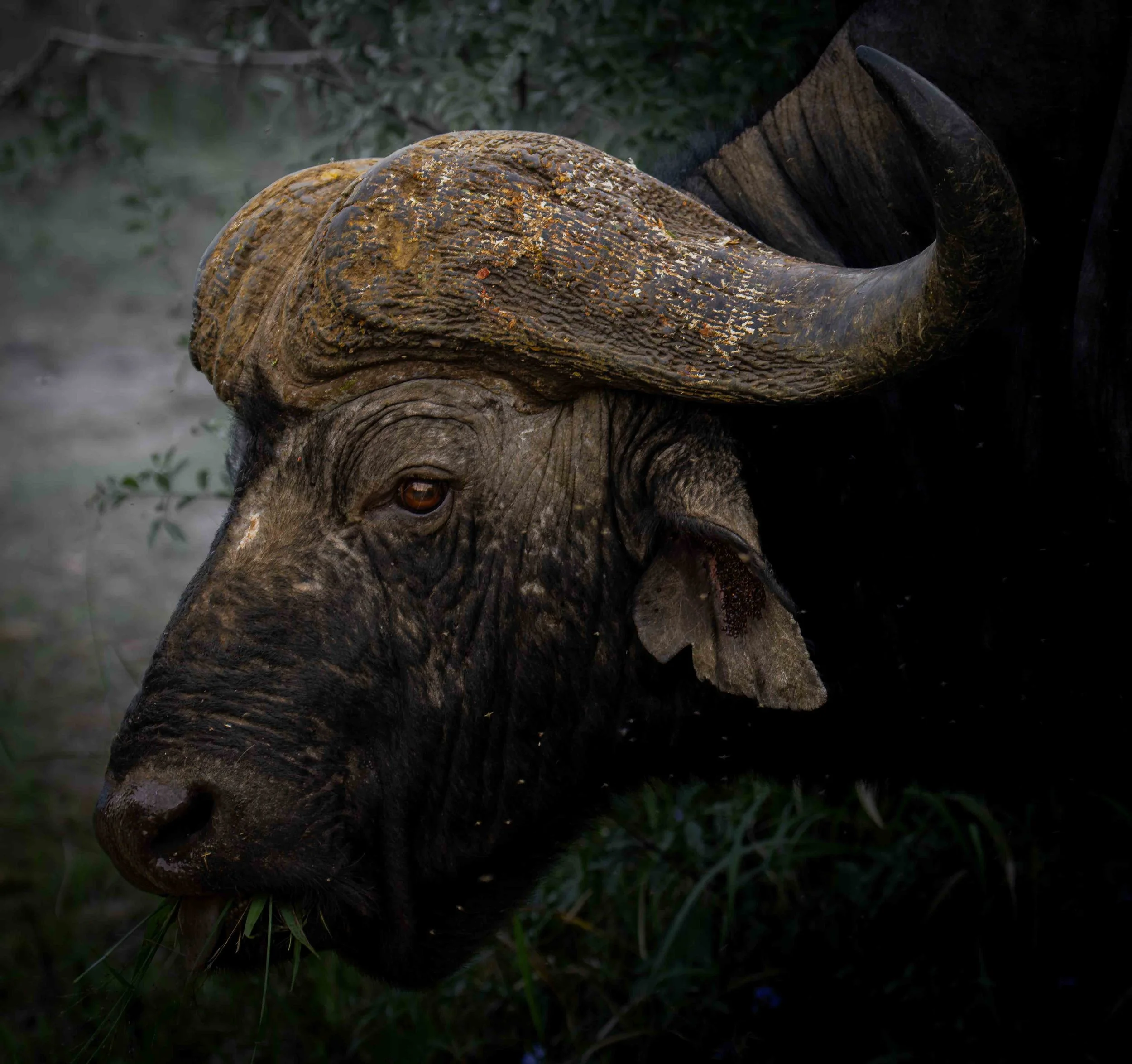
Photo by Deon van Rooyen (www.deoncamer.com) African Cape Buffalo photographed in Zululand South Africa. (known as one of the Big 5)
7. Be Ready for Every Shot
Wildlife encounters can happen in seconds.
Keep your:
Camera switched on with settings in place.
Beginner Camera Setting recommendation - Manual Setting, set ISO on auto, Shutter Speed at 1/800 sec, Aperture as low as your lens allows (f4 to f9). AV Serve Auto Focus mode. Drive mode - burst, high speed continous. When photographing faster moving subject like bird, set your shutter speed up to 1/1500 sec.
Lens cap off
Battery charged and spare battery handy.
Check your memory card ready before leaving the Lodge (I have left my card in my Laptop several times before)
Many incredible sightings are over before you've had time to change lenses.
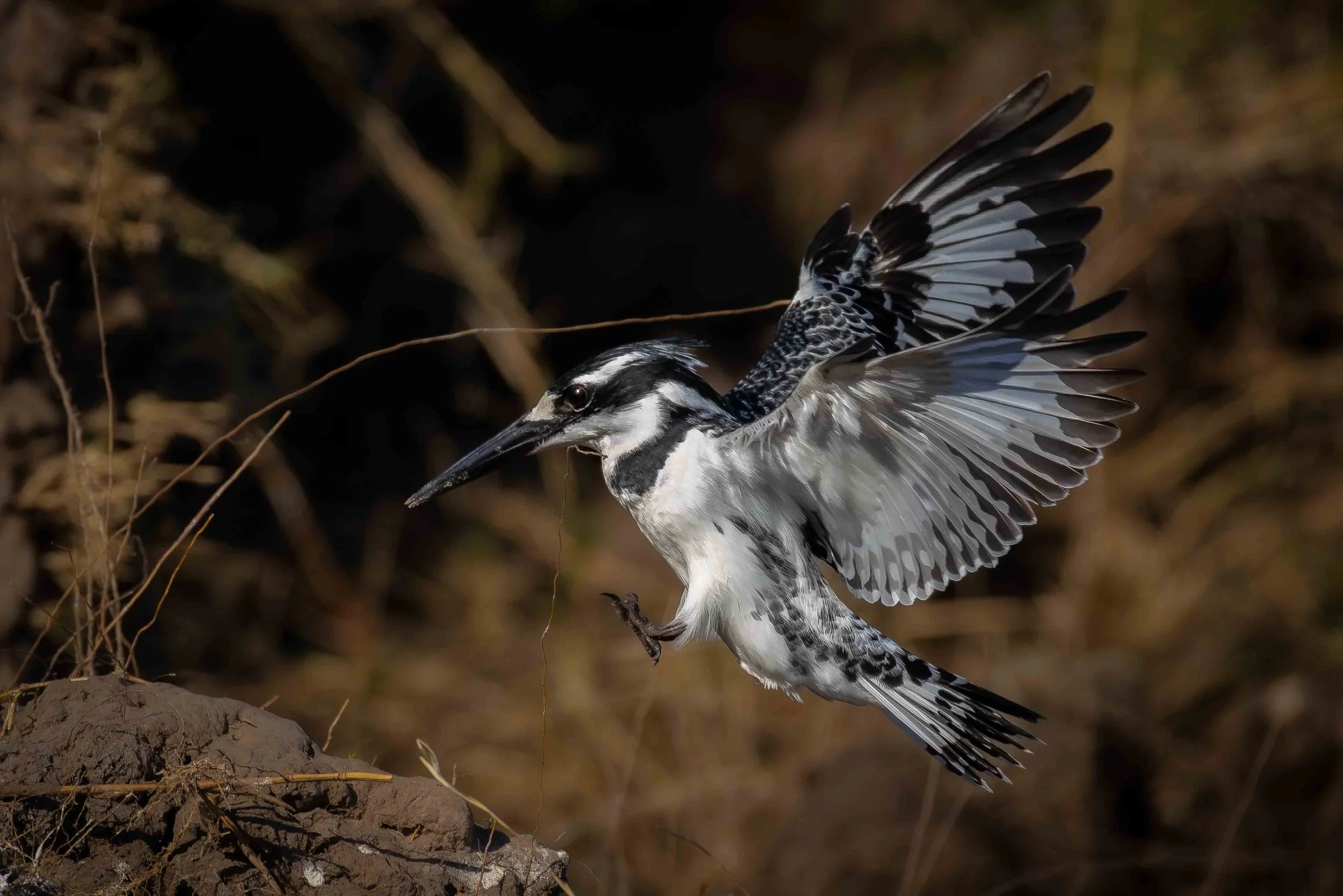
Photo by Deon van Rooyen (www.deoncamer.com) A Pied Kingfisher comes into land on the banks of the Chobe River in Botswana
8. Don't Forget the Scenery in your shots.
While the animals are the stars of the show, Africa's landscapes are equally spectacular.
Capture:
Sunrise or Sunset over the savannah. Sunset with big Game silhouettes make memorable photos.
Acacia trees silhouetted against colourful or dramatic skies
Mountain backdrops
River crossings
Safari camps
Local villages (always ask permission before photographing people)
These images help tell the complete story of your journey.
9. Stay Flexible
Nature doesn't follow a schedule.
Some game drives may produce dozens of incredible sightings, while others may be quieter. Every safari is unique, and unexpected moments often become the highlights of the trip.
Enjoy the experience as much as the photographs. Adapt with the conditions.
10. Slow Down and Take It All In
It's easy to spend every moment looking through the viewfinder, but don't forget to simply watch.
Listen to the birds, breathe the fresh morning air, and appreciate the privilege of being surrounded by some of the world's most remarkable wildlife. Sometimes the most memorable moments are the ones that never make it into a photograph. Enjoy the afternoon siesta’s and meeting new friends.
11. Bonus Tips & Final Thoughts
Always have comprehensive Travel Insurance.
Check that your Passport is valid for more than six months.
When doing a self-guided drive to your Lodge, avoid travelling at night. Always study your route before driving and allow additional daylight travelling time in case you are delayed.
Buy a Local sim card for your mobile phone when you land at your destination airport.
Don’t only rely on one credit card, split fund on multiple cards in case one card is damaged or gets lost.
An African photo safari is far more than a holiday—it's an immersive journey into some of the planet's most extraordinary natural environments. With thoughtful preparation, the right equipment, and a respectful approach to wildlife, you'll return home with not only stunning photographs but also unforgettable experiences and stories to share.
So pack your camera, embrace the adventure, and get ready to witness Africa's wild beauty through your own lens. Happy shooting, and safe travels!
TIP- I will be leading a Photo Safari Workshop in Namibia in May 2028. If you are interested in joining, email me at : dvr3dstudio@yahoo.com for a brochure.
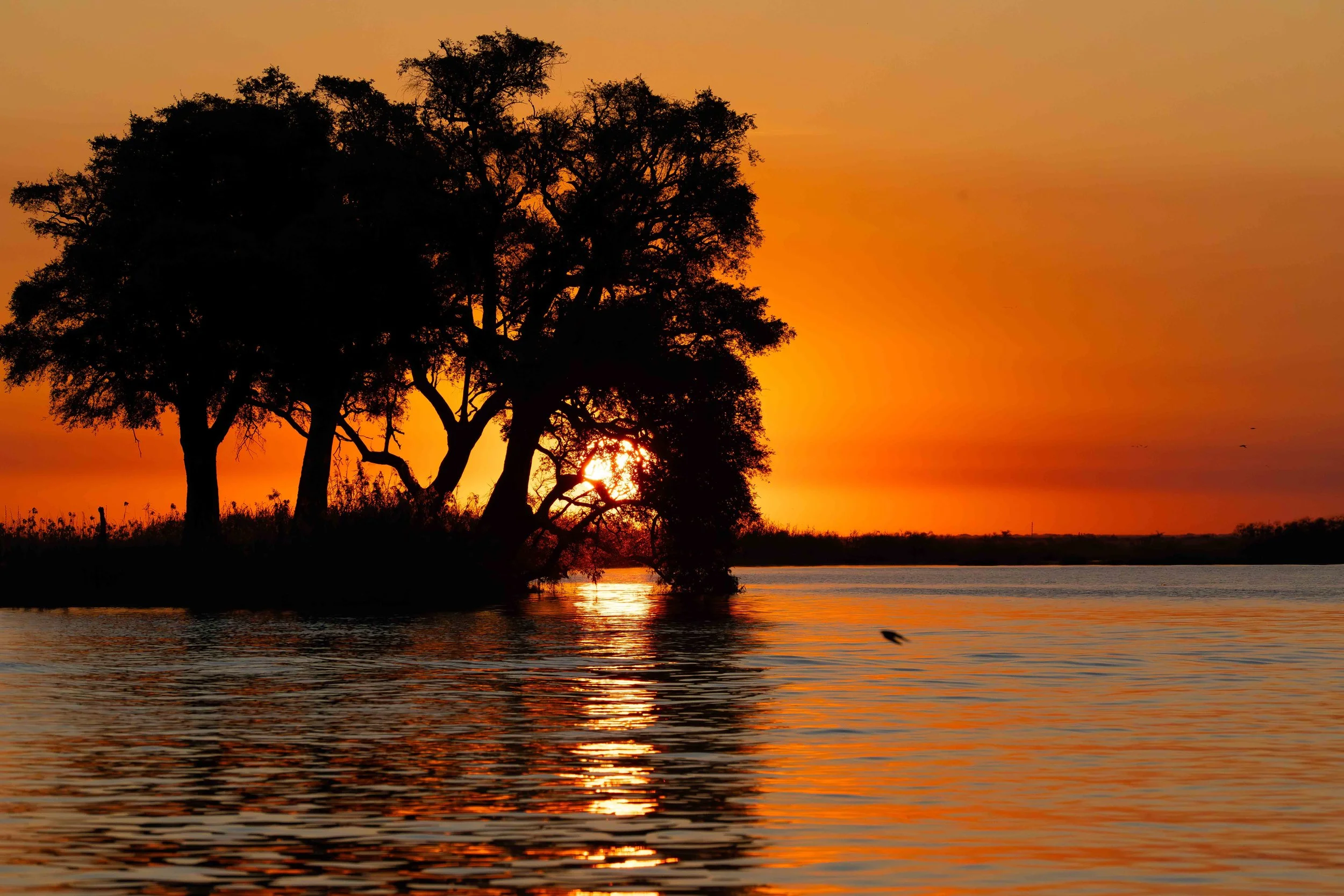
Photo by Deon van Rooyen (www.deoncamera.com), Sunset over the Chobe River in Botswana