Photographing the Purest Water on Earth: The Putaruru Blue Springs, New Zealand
Hidden in the heart of New Zealand’s Waikato region, the Putaruru Blue Springs (Te Puna) is a remarkable natural wonder renowned for its crystal-clear water and mesmerising shades of blue and turquoise. For landscape photographers, it offers a wonderful opportunity to capture the beauty of New Zealand’s freshwater environment.
A Natural Wonder of Exceptional Clarity
The Blue Springs are fed by groundwater originating from rainfall over the surrounding volcanic landscapes, including the Mamaku Plateau. As the water slowly filters through underground volcanic rock aquifers, it can take between 50 and 100 years to reach the surface.
By the time it emerges, the water is exceptionally pure and remarkably free of suspended particles. This extraordinary clarity allows light to penetrate deep into the spring, producing the striking blue and turquoise hues that make this location so distinctive.
The spring releases approximately 42 cubic metres of water per minute, maintaining a remarkably consistent temperature of around 11°C throughout the year. Its pristine water has also played an important role in New Zealand’s bottled-water industry.
Standing beside the spring, it is difficult not to be captivated by the transparency of the water, the vibrant colours, and the subtle movement of the current. It is one of those places where nature does much of the artistic work for you — all that remains is to find the right composition and light.
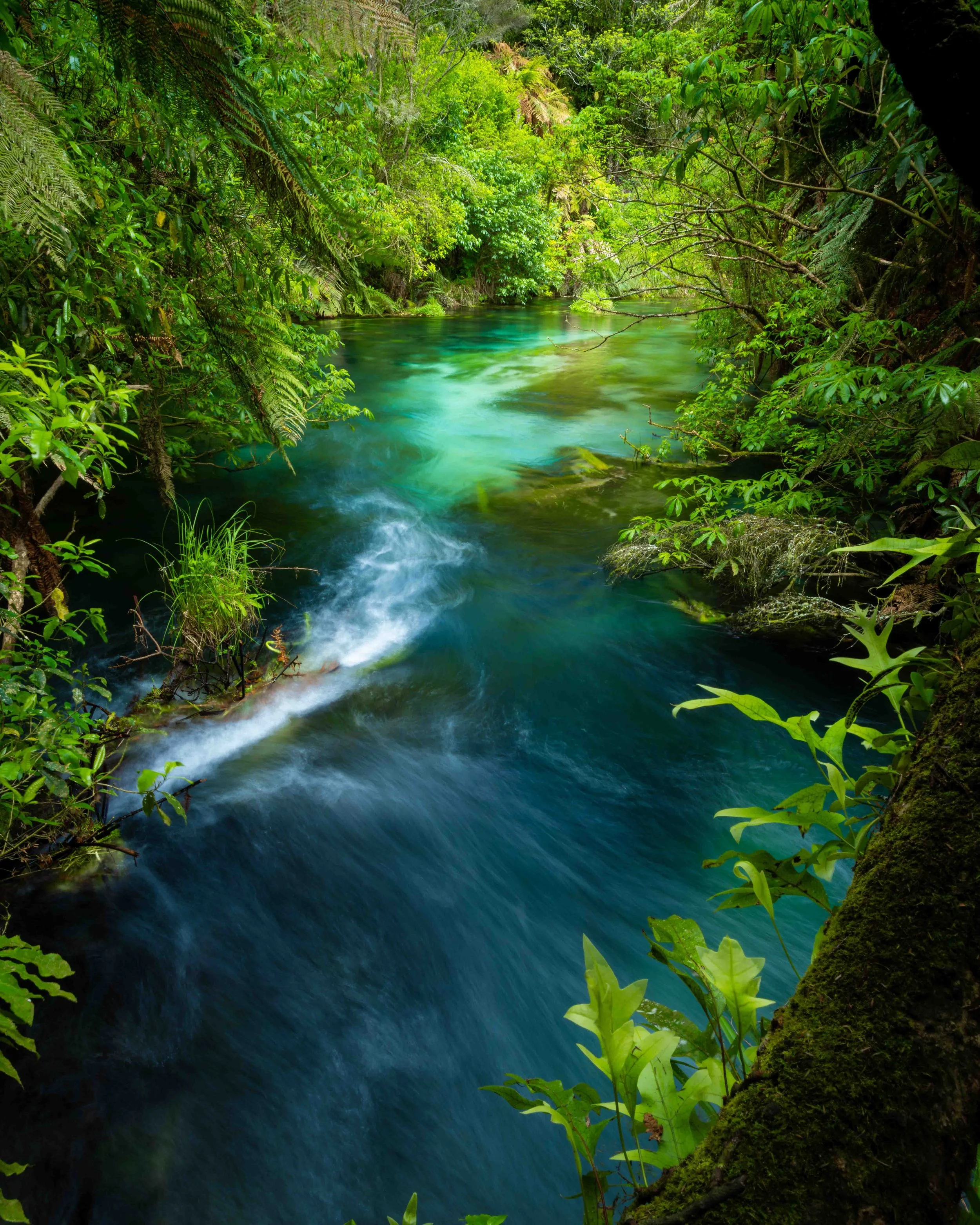
The blue turquoise colours of Putaruru Blue Spring in New Zealand. Camera settings, Canon R5 MKii on tripod, polarizing filter, ISO 160, f22, shutter speed 0,6sec, focal length 23mm
Planning Your Visit
The Putaruru Blue Springs is a popular tourist destination, attracting visitors from both New Zealand and overseas. If, like me, you prefer to photograph a location without too many people in the frame, arriving early and planning your visit carefully is essential.
The Leslie Road car park provides access to the walking track leading to the springs. I recommend avoiding public holidays, long weekends, and peak holiday periods whenever possible, as visitor numbers can increase considerably.
Allow yourself plenty of time to explore the track and look for different perspectives. Rather than rushing from one viewpoint to another, take the time to observe how the light interacts with the water and how the surrounding vegetation can be incorporated into your compositions.
Where to Stay: The Historic Okoroire Hot Springs Hotel
During our visit, we stayed at the historic Okoroire Hot Springs Hotel, conveniently situated for exploring the Blue Springs and the nearby towns of Putaruru and Tirau.
The hotel has a lovely old-world charm, complemented by friendly service and a welcoming atmosphere. Facilities include a restaurant, a local pub where you can meet some of the locals, a golf course, tennis court, and, best of all, natural hot springs.
After a day spent walking and photographing the landscape, relaxing in the hot pools is a wonderful way to unwind. The hotel also makes a charming base from which to explore more of the surrounding Waikato region.
Photographing the Blue Springs
For me, the key to photographing the Blue Springs is understanding how the light affects the colour of the water.
I recommend visiting from around 8:30 am onwards, when the rising sun may begin to illuminate the spring and reveal its beautiful blue and turquoise tones. The ideal time will depend on the season, weather conditions, and the direction of the sunlight, so be prepared to experiment with different viewpoints and exposures.
A polarising filter is an essential piece of equipment for this location. It helps reduce unwanted reflections and glare from the water, allowing the natural colours and clarity of the spring to stand out. Rotate the filter while looking through your camera's viewfinder or at the screen to find the effect that best suits your composition.
A tripod is particularly useful when experimenting with longer exposures to capture the movement of the water. Depending on the flow, exposure time, and desired effect, you can create images that reveal either the delicate movement of the current or the intricate detail beneath the surface.
For tighter compositions, a telephoto zoom lens allows you to isolate interesting patterns, subtle colour variations, and sections of the spring that might otherwise be overlooked. Don't limit yourself to wide-angle photographs — some of the most compelling images can be found in the smaller details.
My Camera Gear and Settings
For the photographs featured in this article, I primarily used the following equipment:
Camera: Canon EOS R5 Mark II
Wide-angle lens: Canon RF 14–35mm f/4 L IS USM — ideal for capturing the broader landscape, the spring's surroundings, and sweeping compositions.
Telephoto lens: Canon EF 100–400mm f/4.5–5.6L IS USM — useful for isolating details, tighter compositions, and the beautiful patterns created by the water.
When using the telephoto lens at longer focal lengths, I aim for a shutter speed of at least 1/400 second to help minimise camera shake and maintain sharpness. The appropriate shutter speed will depend on the focal length, subject movement, stabilisation, and whether a tripod is being used.
For longer exposures, I mounted my camera on a tripod to keep the composition steady and capture the movement of the spring. A tripod also allows more deliberate framing and makes it easier to fine-tune the composition.
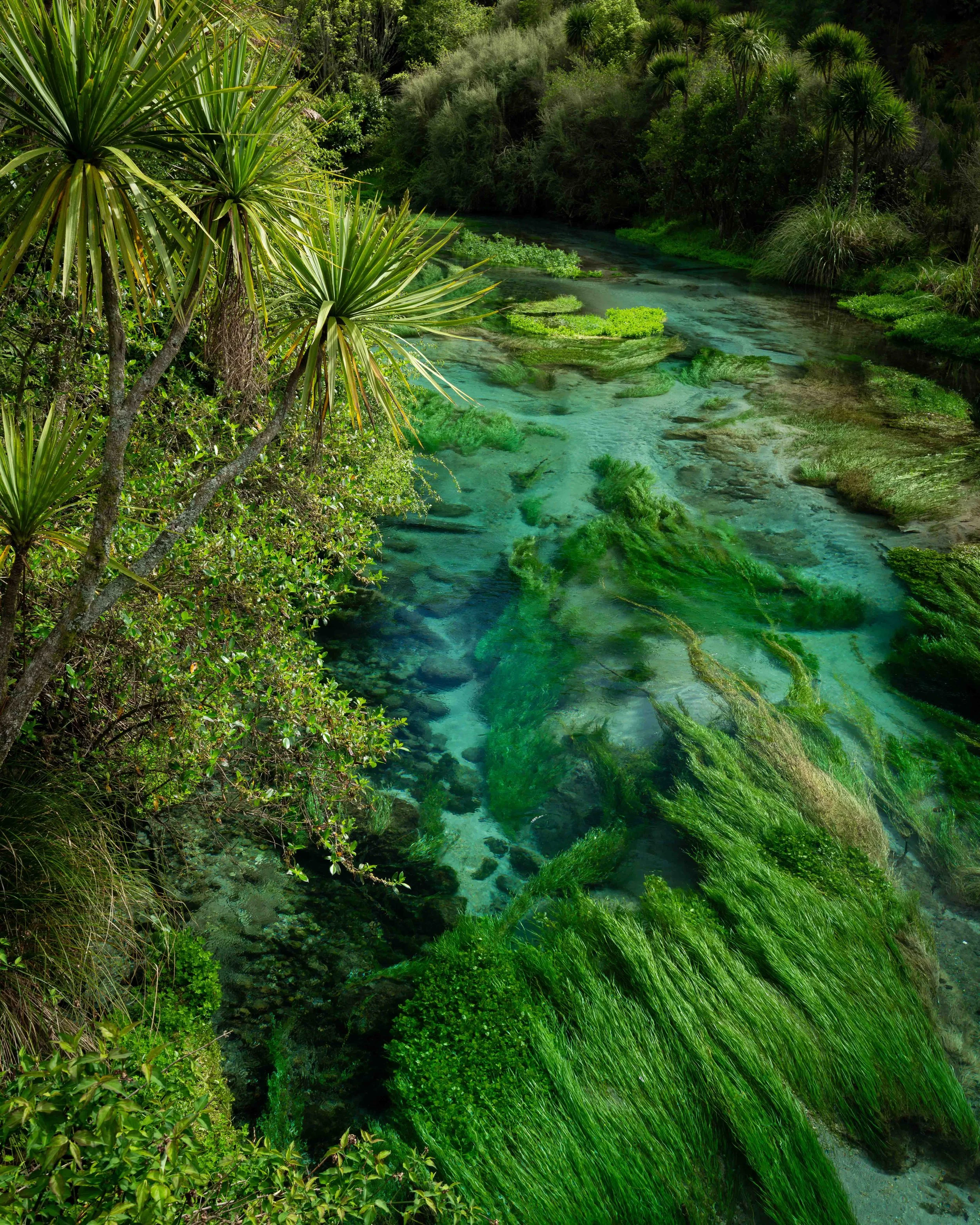
Using a polarizing filter reduces glare and enhances the blue turquoise colours of Putaruru Blue Spring. Camera settings F14, ISO 200, shutter speed 1/60 sec., focal length 24mm, handheld, polarizing filter
Essential Photography Tips
Before heading out, I recommend packing the following:
A sturdy tripod for long exposures and carefully composed landscape images.
A polarising filter to reduce reflections and enhance the colours of the water.
Your wide-angle and telephoto lenses to give you greater creative flexibility.
A selection of neutral-density filters if you intend to experiment with longer exposures in bright conditions.
Drinking water and a snack to keep you comfortable during your visit.
A hat, sunglasses, and sunscreen for sun protection.
A lightweight rain jacket, as New Zealand's weather can change quickly.
Most importantly, take your time. Experiment with different focal lengths, shutter speeds, and compositions. Look for reflections, leading lines, textures, and contrasts between the vivid water and the surrounding greenery.
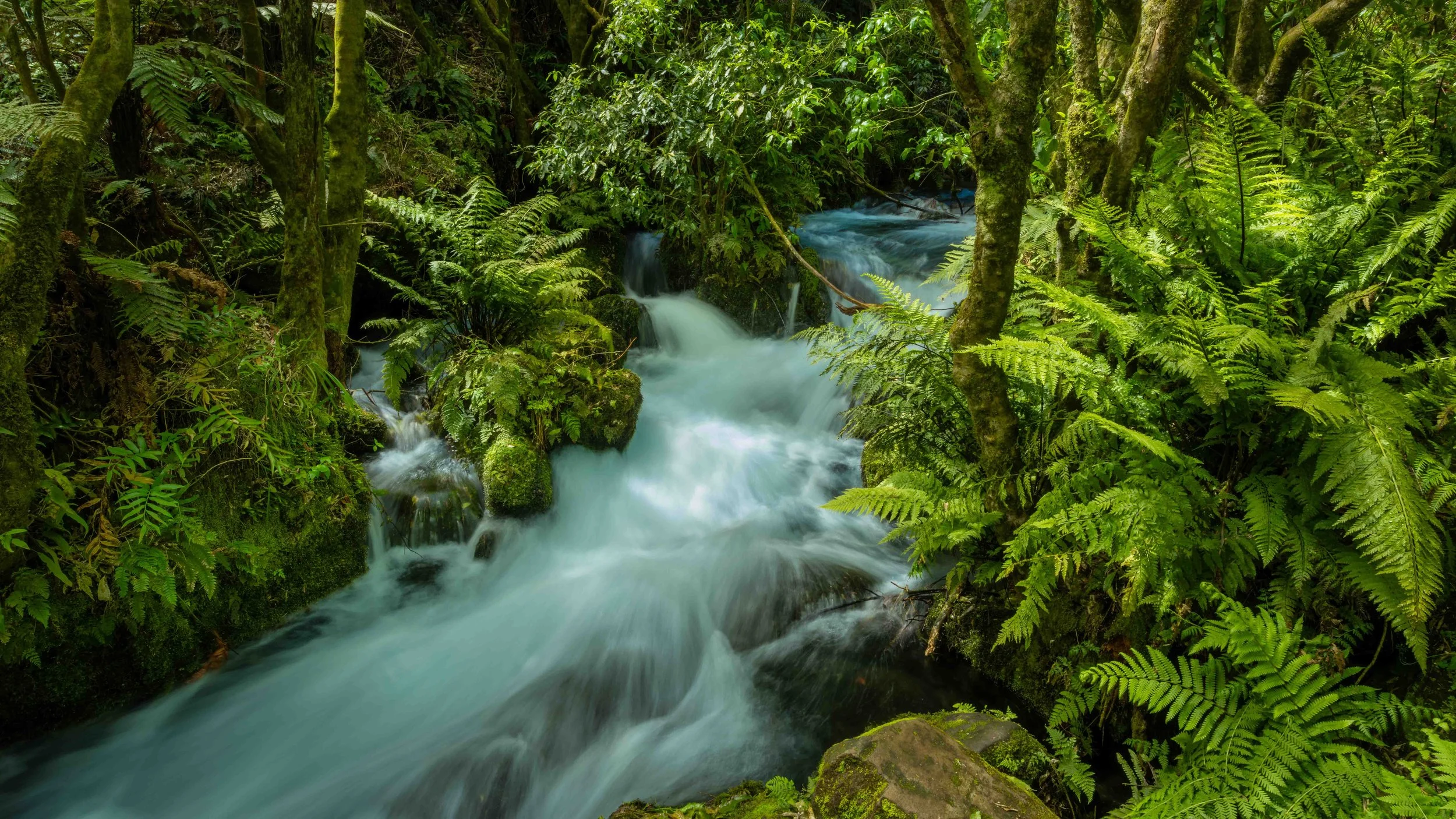
Placing your camera on a tripod with a longer exposure and smaller aperture helps capture movement of the spring. Camera settings, f22, ISO 50, shutter speed ½ sec, focal length 21mm
Respecting This Precious Natural Environment
The Blue Springs is a special part of New Zealand's natural heritage, and its beauty deserves to be protected.
With so many visitors passing through, we all have a responsibility to minimise our impact. Please take all rubbish with you, remain on designated tracks, and avoid disturbing the surrounding vegetation and wildlife.
Sadly, some visitors throw coins into the water for good luck. Although this may seem harmless, it introduces foreign materials into an exceptionally pristine environment. Please resist the temptation and encourage others to do the same.
As photographers, we have a particular responsibility to respect the places we visit. Capturing a beautiful image should never come at the expense of the environment that makes it possible.
Is the Putaruru Blue Springs Worth Visiting?
Although the Putaruru Blue Springs is a well-known tourist destination that has been photographed countless times, I still highly recommend adding it to your New Zealand photography itinerary.
Its extraordinary clarity, vibrant turquoise colours, and peaceful natural surroundings make it a genuinely special location. Even if you have seen hundreds of photographs of the spring, experiencing it in person is something quite different.
For photographers, the challenge is not simply to reproduce the familiar postcard image, but to discover your own interpretation of this remarkable place. Look for a different angle, wait for the right light, experiment with the movement of the water, and pay attention to the smaller details that make each composition unique.
The Putaruru Blue Springs is a reminder that some of New Zealand's most beautiful photographic subjects are also among its most fragile.
Visit with your camera, take your time, and leave nothing behind but footprints — and nothing behind in your memory but the experience.