Photographing the Meerkats of the Kalahari-Deon van Rooyen
Spending several days in the Kalahari Desert photographing wildlife is an incredibly rewarding experience, particularly during the dry winter months. The Kalahari has a unique beauty at this time of year. In the early morning and late afternoon, the low winter sun bathes the landscape in warm, golden light, making the tall, dry grasses glow against the deep red sands.
For me, one of the highlights of my time in the Kalahari was getting down incredibly low with my camera and spending time photographing one of the desert's most entertaining little inhabitants — the meerkat.
There is something wonderfully captivating about watching a family of meerkats go about their daily lives. They are constantly busy, searching for food, digging, exploring and interacting with one another. Yet, despite all the activity, there always seems to be one individual taking on the important responsibility of sentry duty.
Standing upright on a termite mound or another elevated position, the lookout carefully scans the surrounding landscape for potential predators. The moment danger is detected, an alarm call can send the entire group racing for the safety of their underground burrow system.
Life in the Kalahari
Meerkats are remarkably well adapted to surviving in the harsh conditions of the Kalahari. Their powerful foreclaws are perfectly suited to digging through the sandy soil in search of food and for constructing and maintaining their burrows.
They are highly social animals, living in family groups that can range from just a few individuals to around 30 or more. Life within the group is structured around a social hierarchy, with dominant breeding individuals and subordinate members that play an important role in caring for and protecting the young.
Their underground burrow systems provide much-needed shelter from the extreme temperatures of the Kalahari. Beneath the surface, temperatures are considerably more stable, creating a more comfortable microclimate during both the heat of the day and the cold desert nights.
Meerkats are generally most active during the cooler parts of the day, particularly in the early morning and late afternoon. This also happens to be some of the most beautiful light for wildlife photography.
As I watched them moving through the grass and across the red sand, I was fascinated by how quickly they could switch from relaxed foraging to complete alertness. Their communication is incredibly sophisticated, with a variety of calls used to maintain contact with the group and to warn others when danger is nearby.
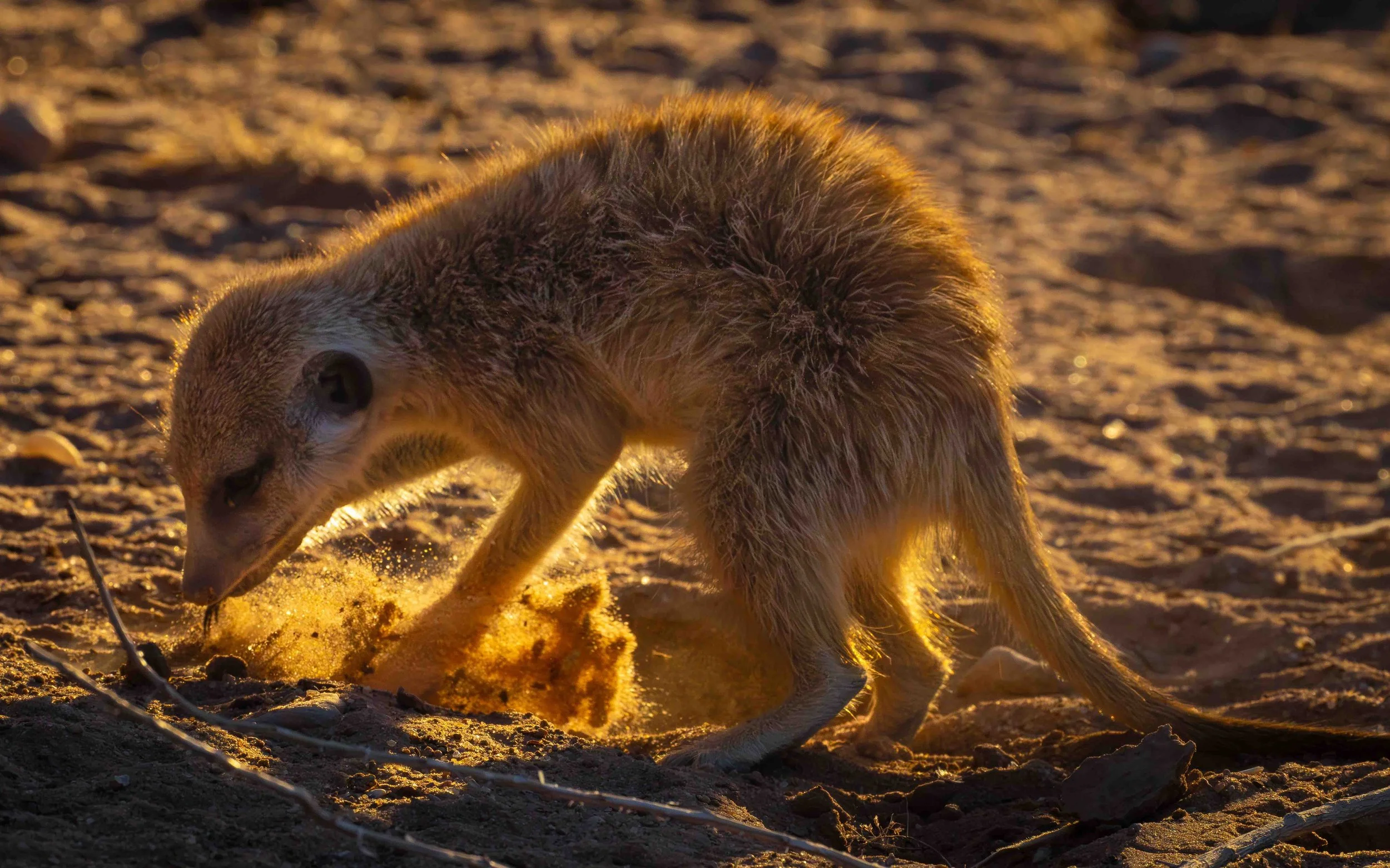
Golden sand and dust as a Meerkat dig for food in the Kalahari Desert
Getting Down Low
Photographing meerkats successfully is all about patience and perspective.
I wanted to get as low to the ground as possible so that I could photograph them at eye level, rather than looking down on them. This low perspective creates a much stronger connection between the viewer and the animal and also allows the surrounding Kalahari landscape to become part of the image.
Lying low with a long telephoto lens, waiting quietly and allowing the meerkats to become comfortable with my presence, was an incredibly rewarding experience. Their unpredictable behaviour also makes every encounter different. One moment they are digging furiously for food, the next they are standing perfectly upright, scanning the horizon.
From a photographic perspective, those moments of alertness are particularly special.
The combination of the golden winter light, red Kalahari sand, dry grasses and the expressive behaviour of the meerkats created some wonderful opportunities. The soft evening light was especially beautiful, illuminating their fur and separating them from the background.
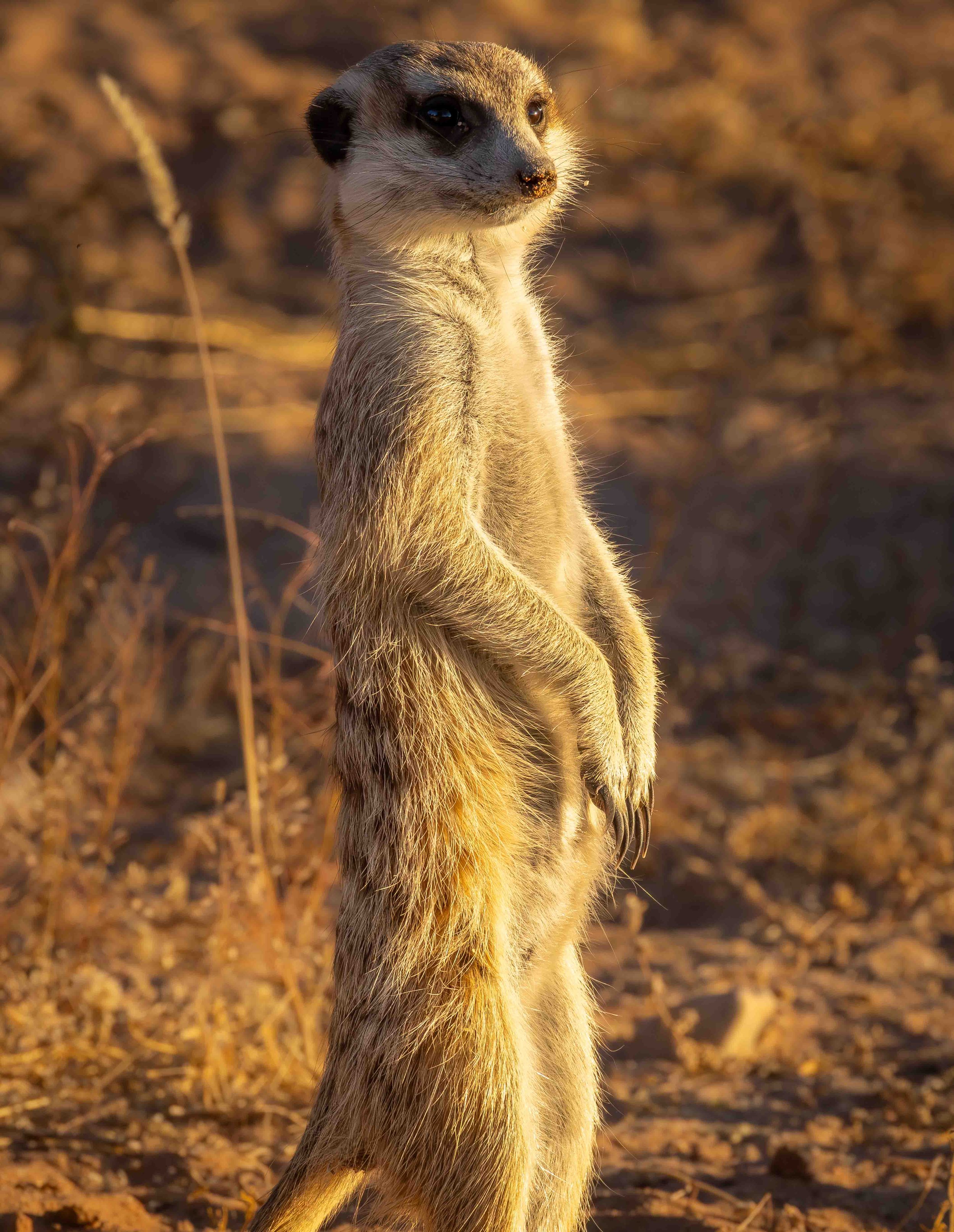
A Kalahari Highlight
Photographing the meerkats was undoubtedly one of the highlights of my time photographing wildlife in the Kalahari. They are endlessly entertaining to watch, but beyond their charm, I found myself fascinated by their family structure, communication and remarkable adaptations to life in such an unforgiving environment.
Wildlife photography is not simply about capturing a photograph. For me, it is about spending time observing an animal, understanding its behaviour and waiting for those fleeting moments when everything comes together — the light, the environment, the behaviour and the composition.
The meerkats of the Kalahari provided plenty of those moments.
Below are a couple of the images I managed to capture during my time photographing them, along with the camera settings I used.
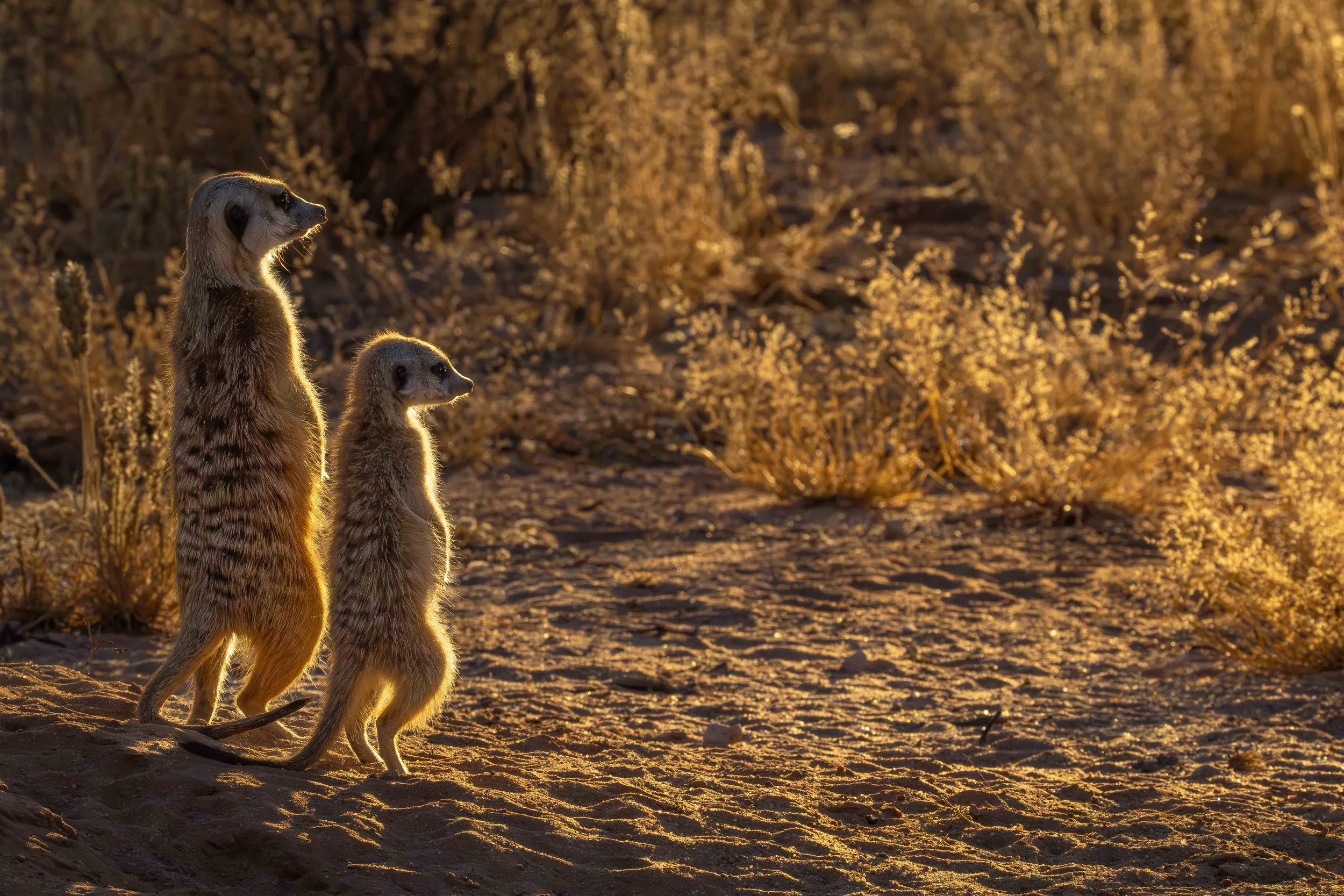
Two Meerkats looking at the sunset in the Kalahari Desert - “We can conquer the world together” -This image received a Finalist for mammal behaviour in the 2025 Pangolin Photographic competition
Photography Details
Location: Kgalagadi Transfrontier Park – Mata-Mata Camp
Camera: Canon EOS R5 Mark II
Lens: Canon RF 200–800mm telephoto lens
Camera Settings:
ISO: 3200
Aperture: f/10
Shutter Speed: 1/2000 sec
I used ISO 3200 to compensate for the softer, lower light during the late afternoon. Modern cameras such as the Canon EOS R5 Mark II handle higher ISO settings remarkably well, and with careful noise reduction during post-processing, I was able to retain plenty of detail.
The fast shutter speed of 1/2000 sec was particularly useful for freezing the meerkats' constant movement. Even when they appear to be standing still, they can move incredibly quickly, so having a fast shutter speed gave me a better chance of capturing those fleeting moments sharply.
For me, photographing the meerkats was a perfect example of why wildlife photography requires patience. Sometimes the best photographs come when you simply get down low, slow everything down, observe the behaviour and wait for the right moment.
And in the Kalahari, surrounded by red sand, golden grass and beautiful winter light, those moments are truly unforgettable.
If you are interested in joining me in Namibia in 2028, have a look at my website for upcoming Photo workshops.
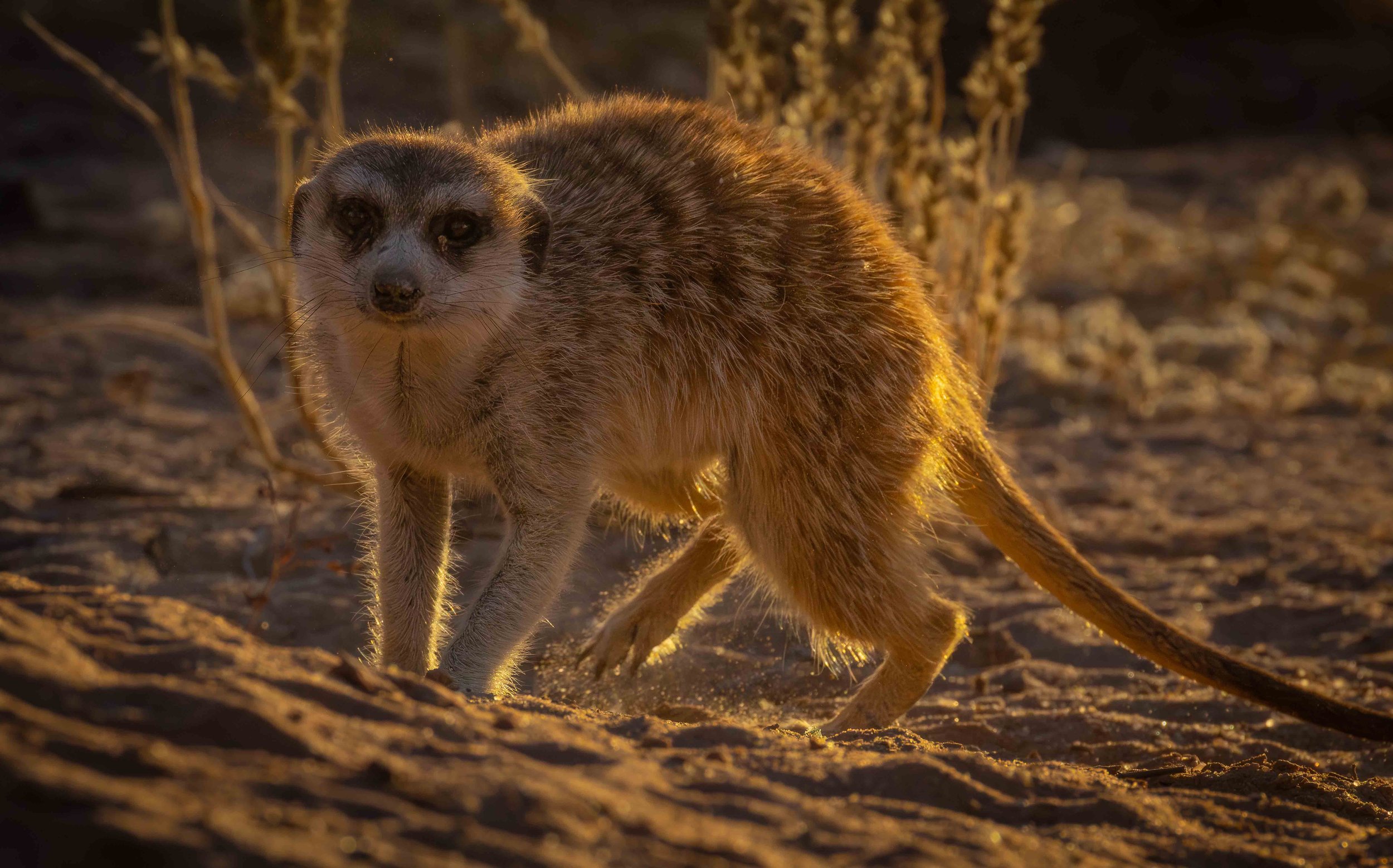
Meerkat at sunset in the Kalahari - Golden glows of the late afternoon winter sun across the Kalahari Desert